Lens Test: Zeiss ZE and CP2s, Canon L Series, and Leica R Glass

Part of being a cinematography intern is not only knowing all the gear but how it can be used to enhance your visual storytelling. The characteristics of a lens can infuse a mood, a style, etc. Being obsessed with subtleties is key.
Shane encourages us to use all our tools and test them in the line of fire. We have been using Canon, Leica, and Zeiss lenses but haven’t had the chance to compare them all side by side. Shane saw this as a good learning exercise and asked us to put together a lens test.
We used 18 lenses, lit the scenes with our Home Depot lighting kit, and spent a day shooting four scenarios to compare the aesthetics between the lenses for video. We kept our settings consistent between the lenses and here are our results. Take them with a grain of salt as it’s not a definitive test but more of a practical observation.
Watch the Lens Comparison Test
This was all shot on the Canon 5D Mark II with the Neutral picture style, and all of the footage is raw with no color correction.
The Lenses
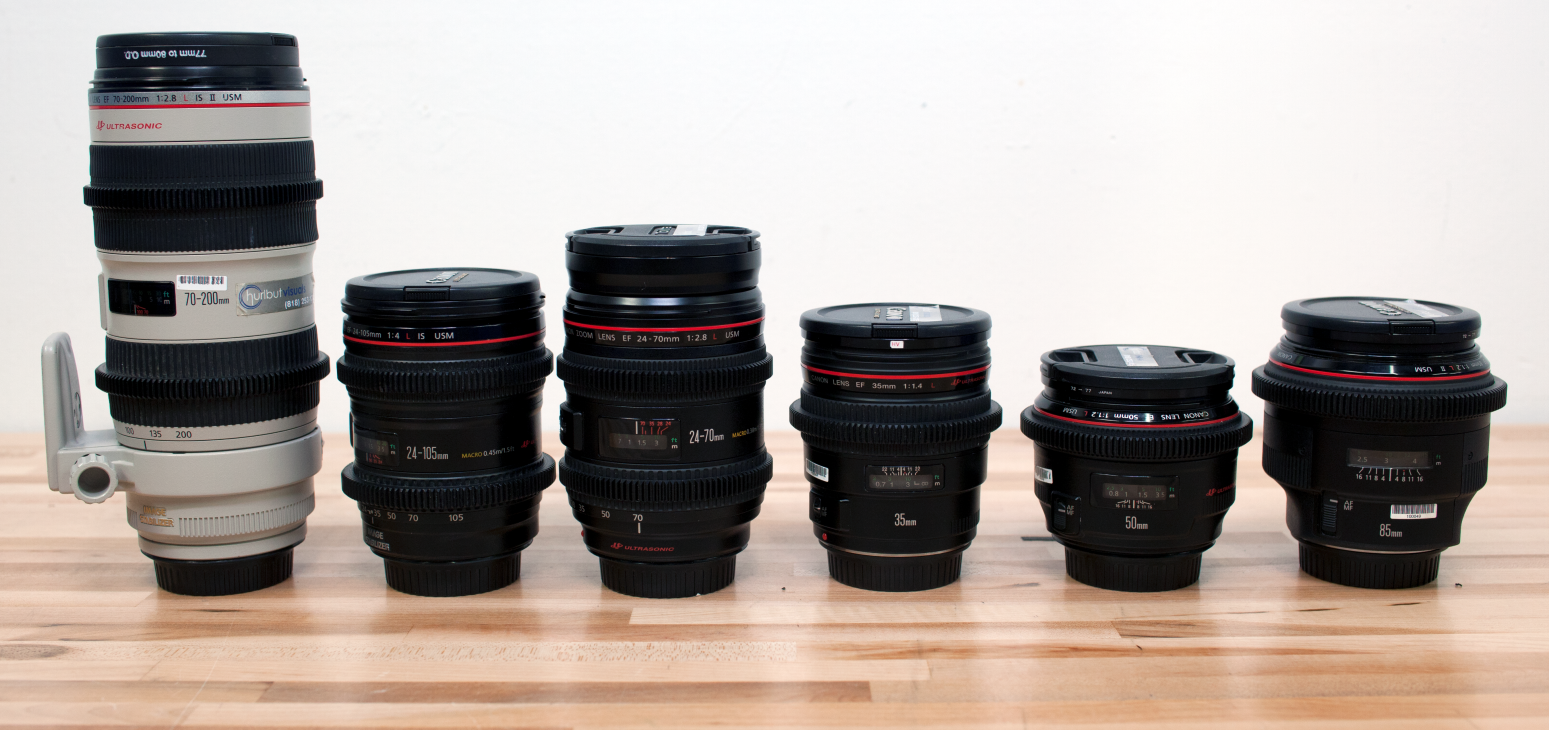
- Canon L 35mm F/1.4, 50mm F/1.2, 85mm II F/1.2, 24-70mm F/2.8, 24-105mm F/4, and 70-200 IS II F/2.8
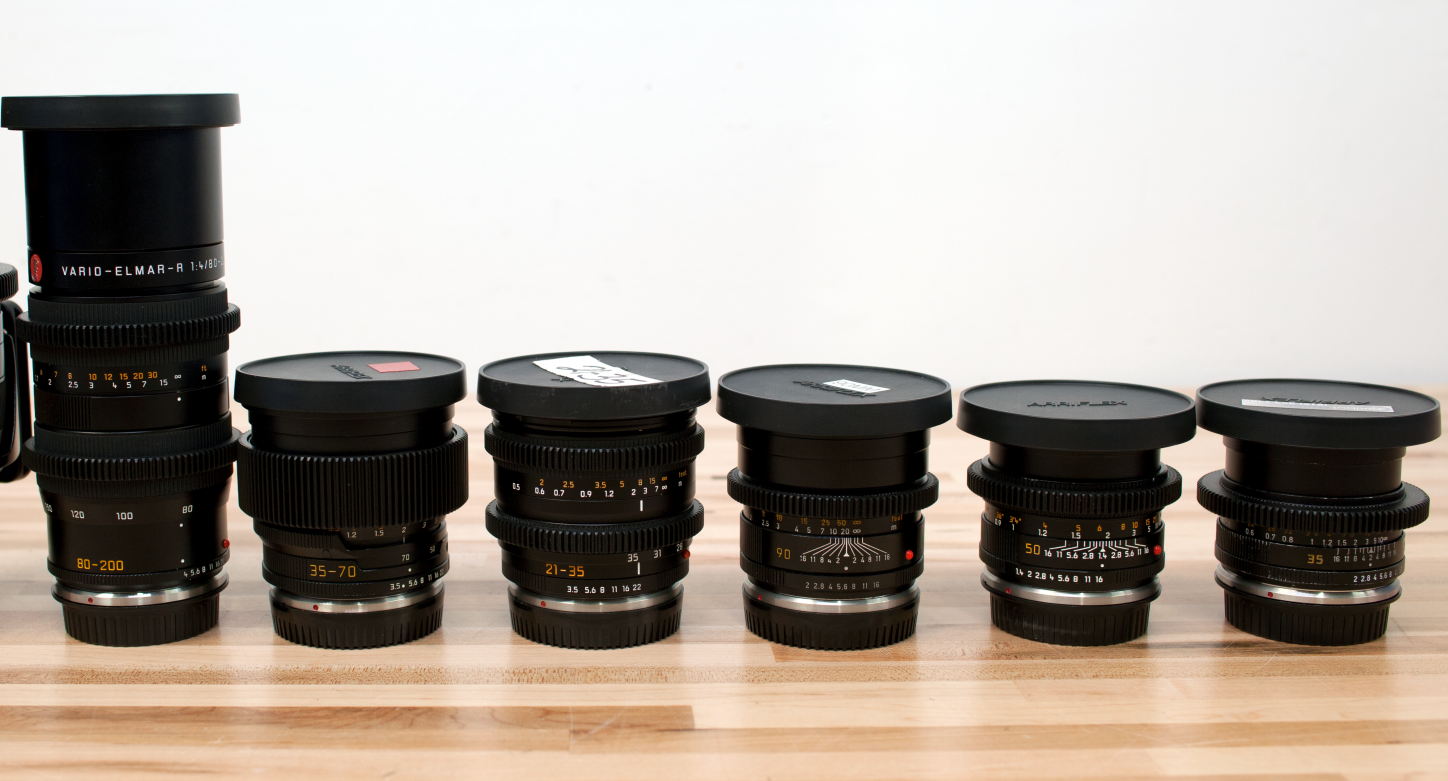
- Leica R 35mm F/2, 50mm F/1.4, 90mm F/2, 21-35mm F/3.5, 35-70mm F/3.5, and 80-200mm F/4
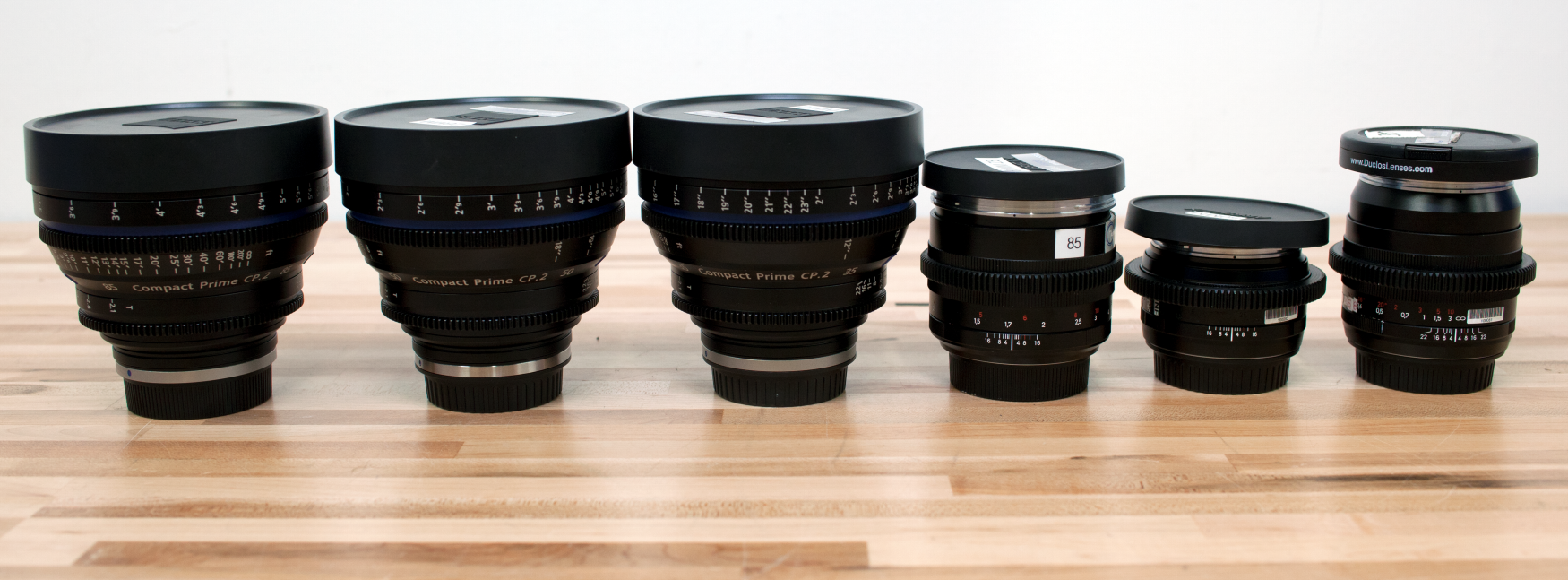
- Zeiss ZE 35mm F/2, 50mm F/1.4, and 85mm F/1.4
- Zeiss CP2 35mm T/2.1, 50mm T/2.1, and 85mm T/2.1
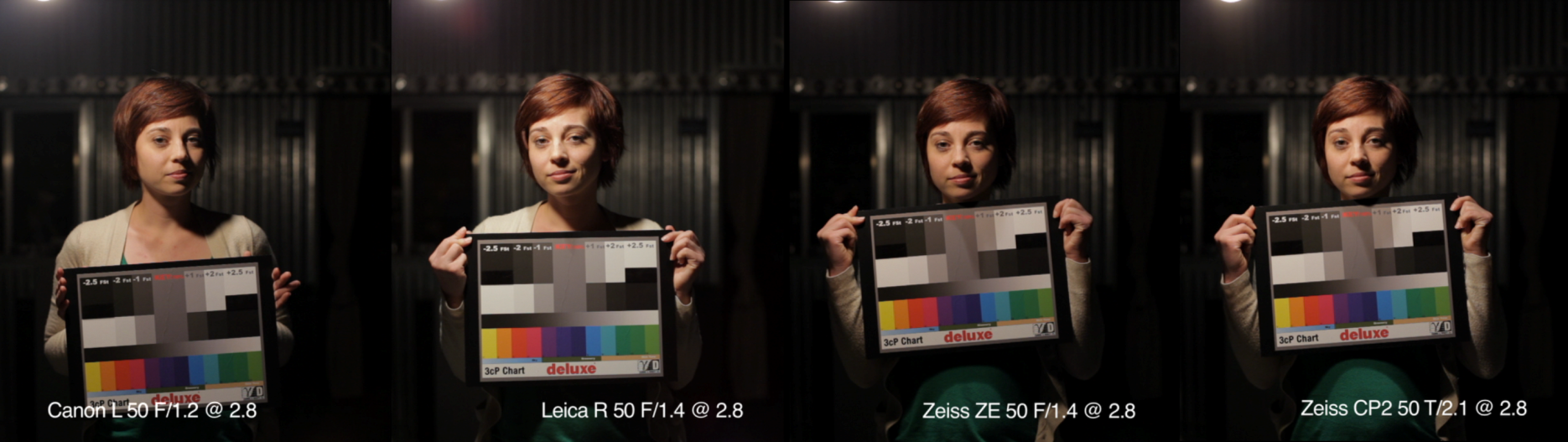
Setup 1
Interior with a mix of Tungsten and Daylight
ISO 640
4200K White Balance
F/4

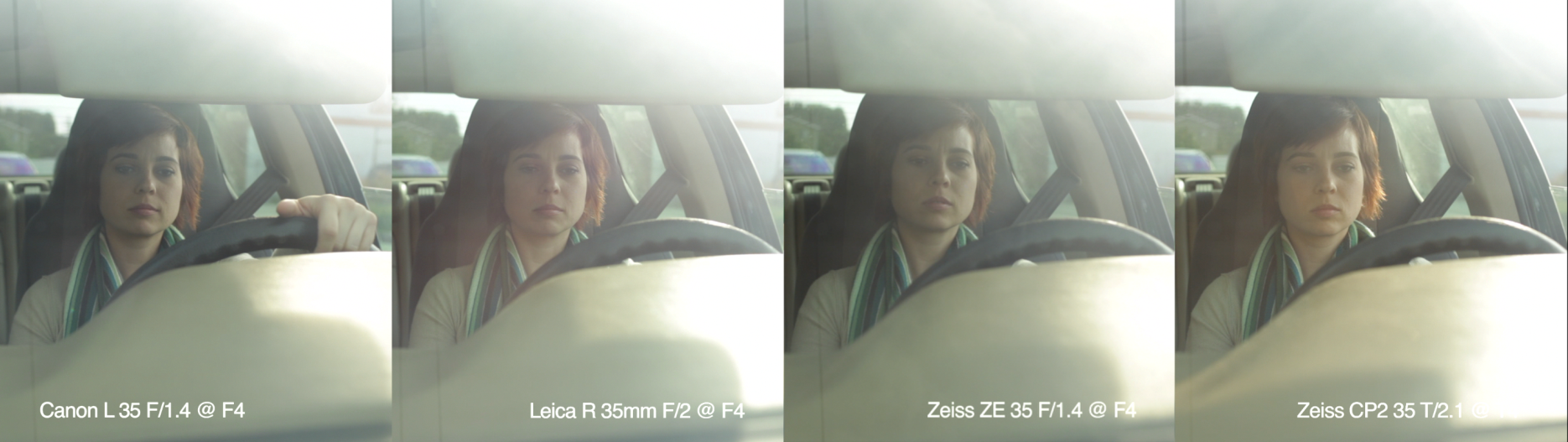
Setup 2
Daylight car scene
ISO 160
5600K White Balance
F4
Tiffen Water White ND 3
Tiffen Water White Circular Polarizer
Setup 3
Tungsten bulb
ISO 320
3200K White Balance
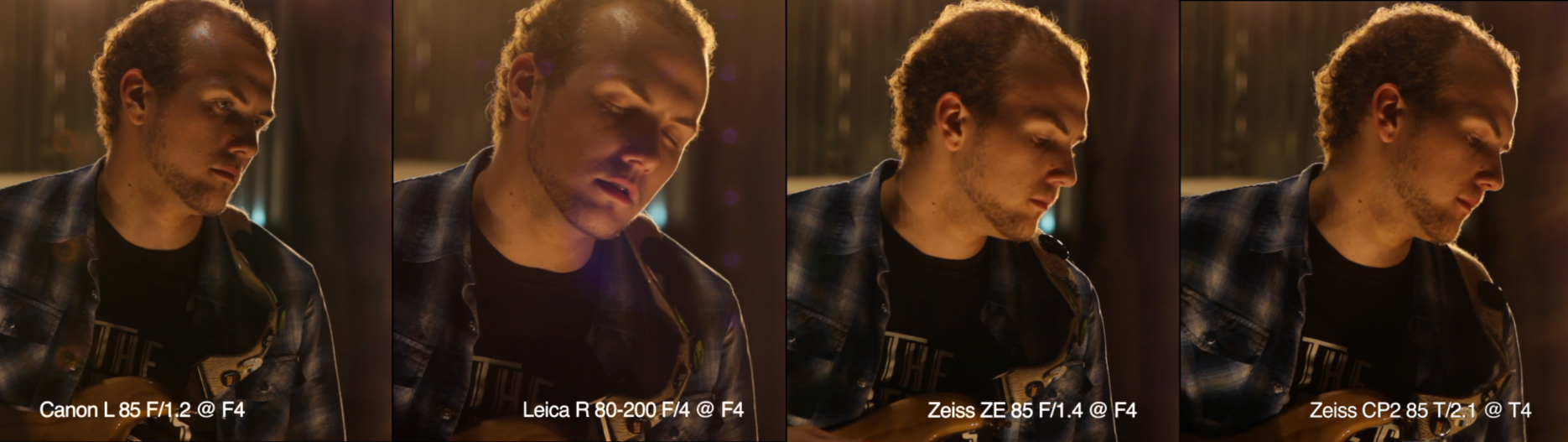
Setup 4
Tungsten lighting
ISO 160
4200 K White Balance
F4
Conclusions
Canon
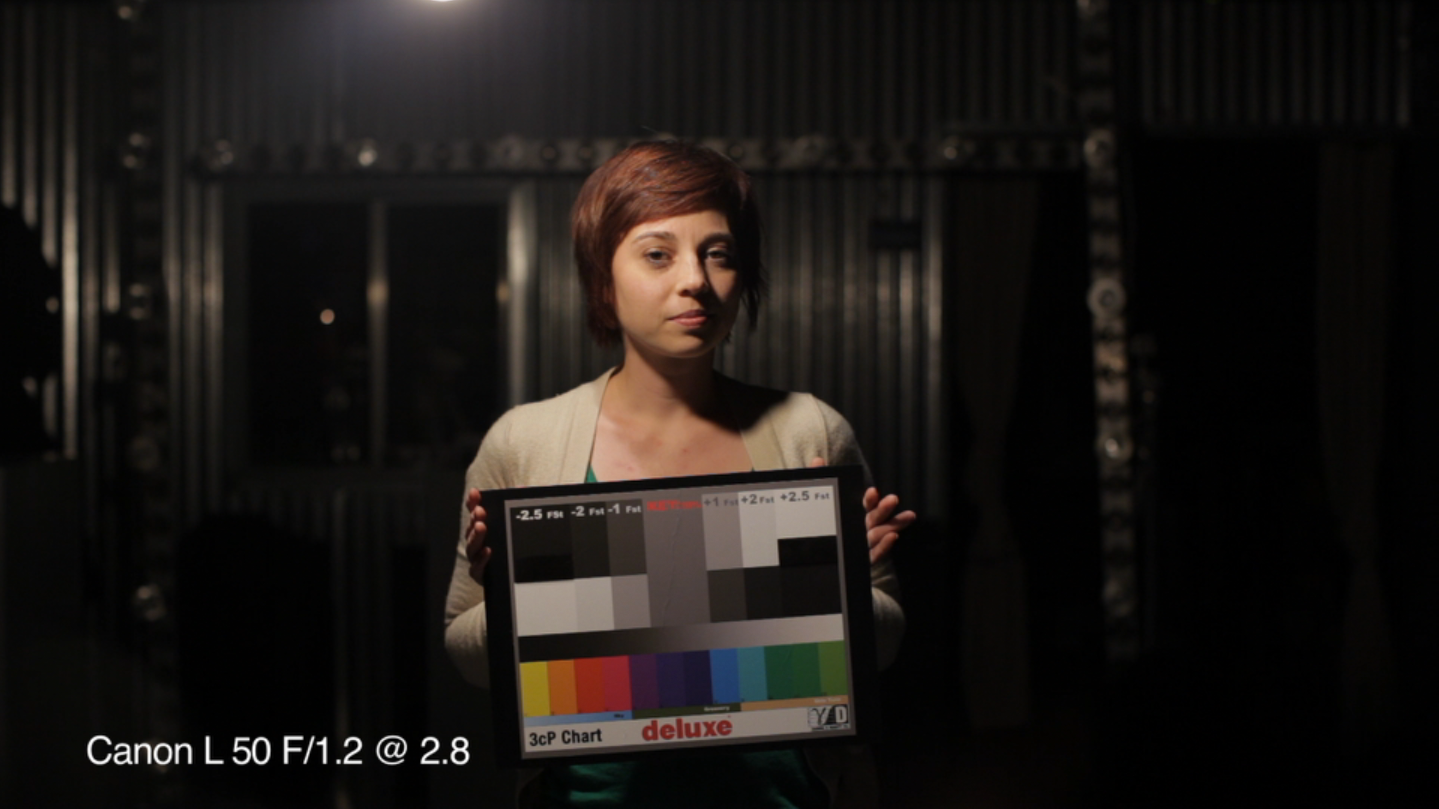
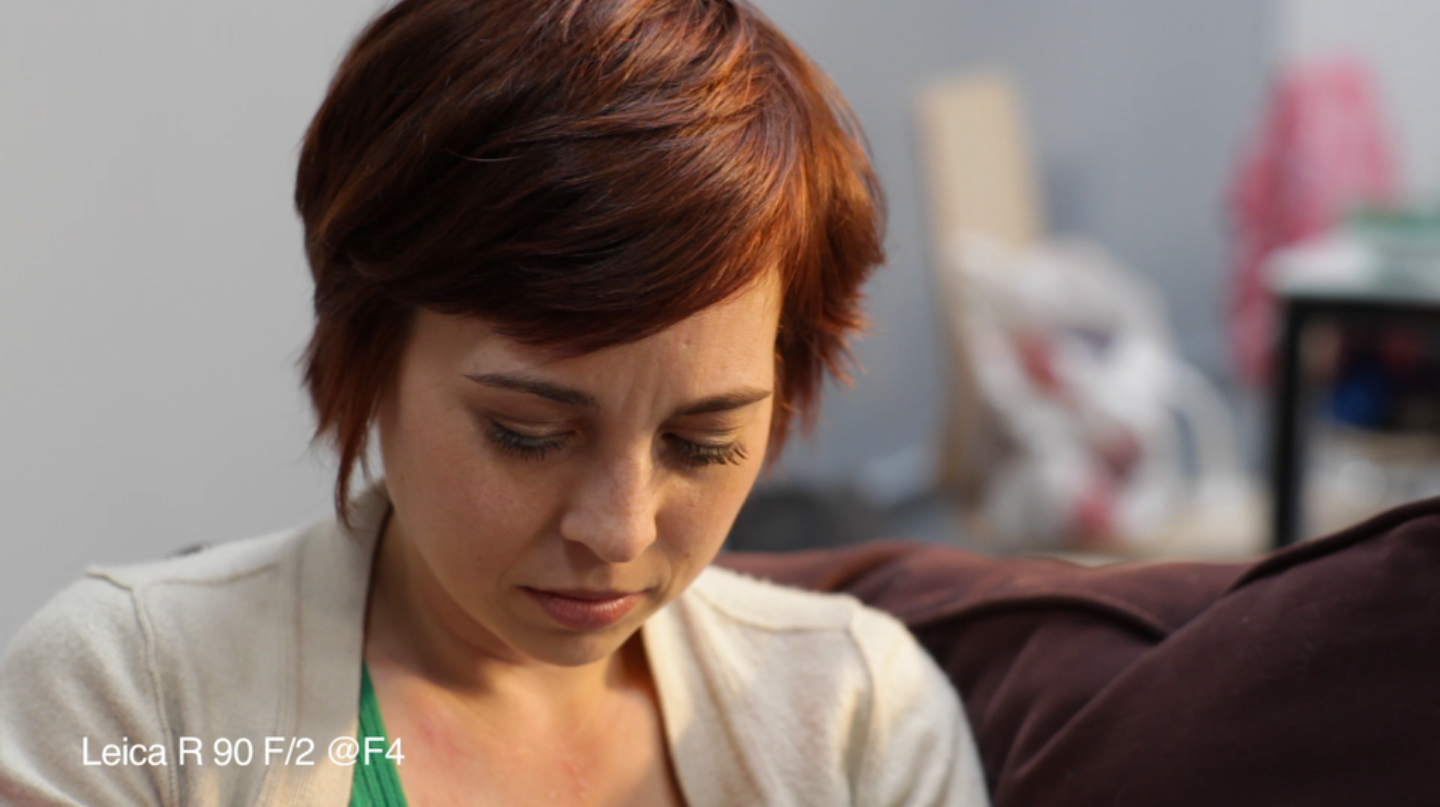
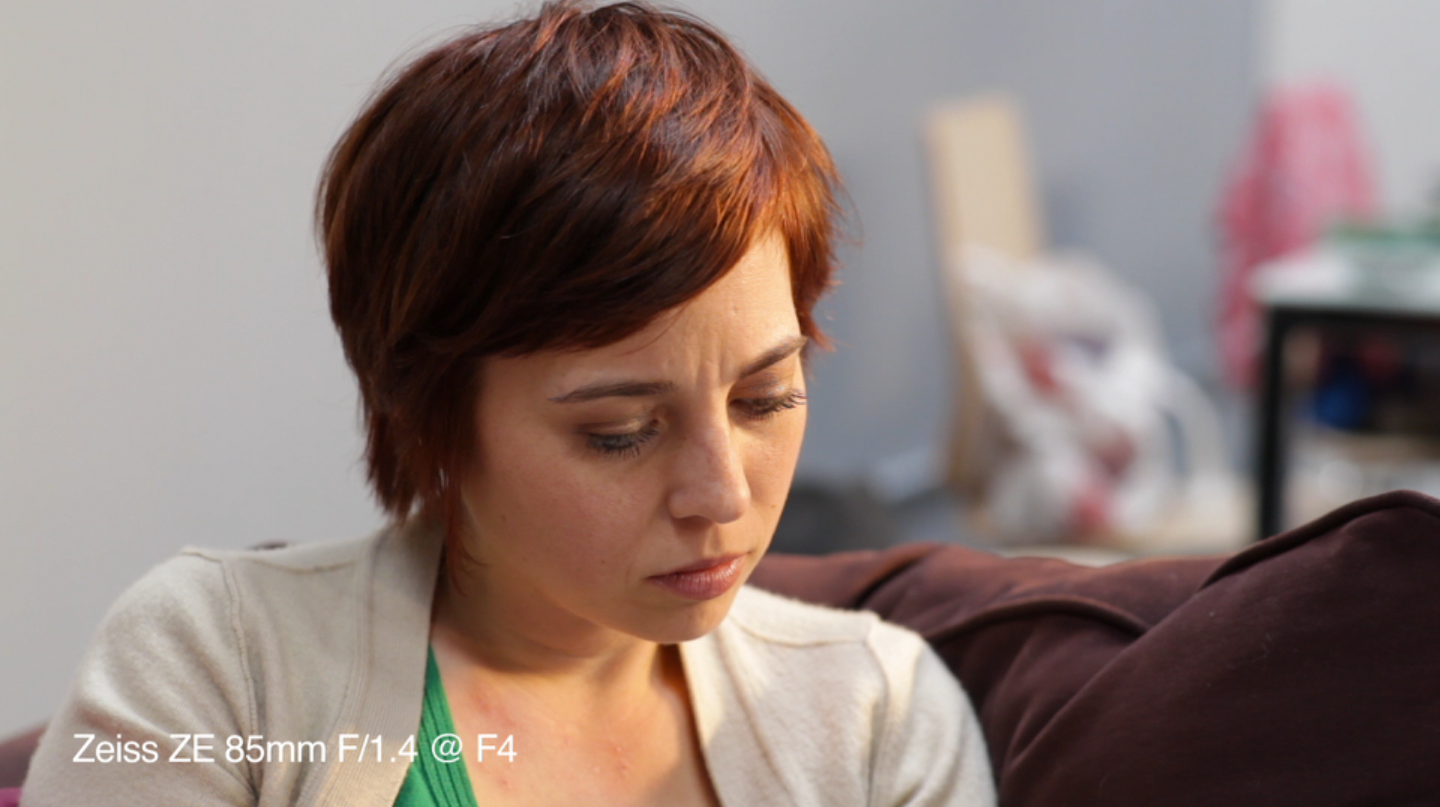
Overall the Canon glass produced great skin tones and colors. The reds seemed to be slightly more saturated than the other lenses with a slight bleed between red and magenta on our color charts. Very sharp images as well from the primes and the zooms were a bit softer.
The images were almost too sharp in some cases which caused small amounts of moire in hair especially. Also, the Canon lenses tended to breathe more than the others.
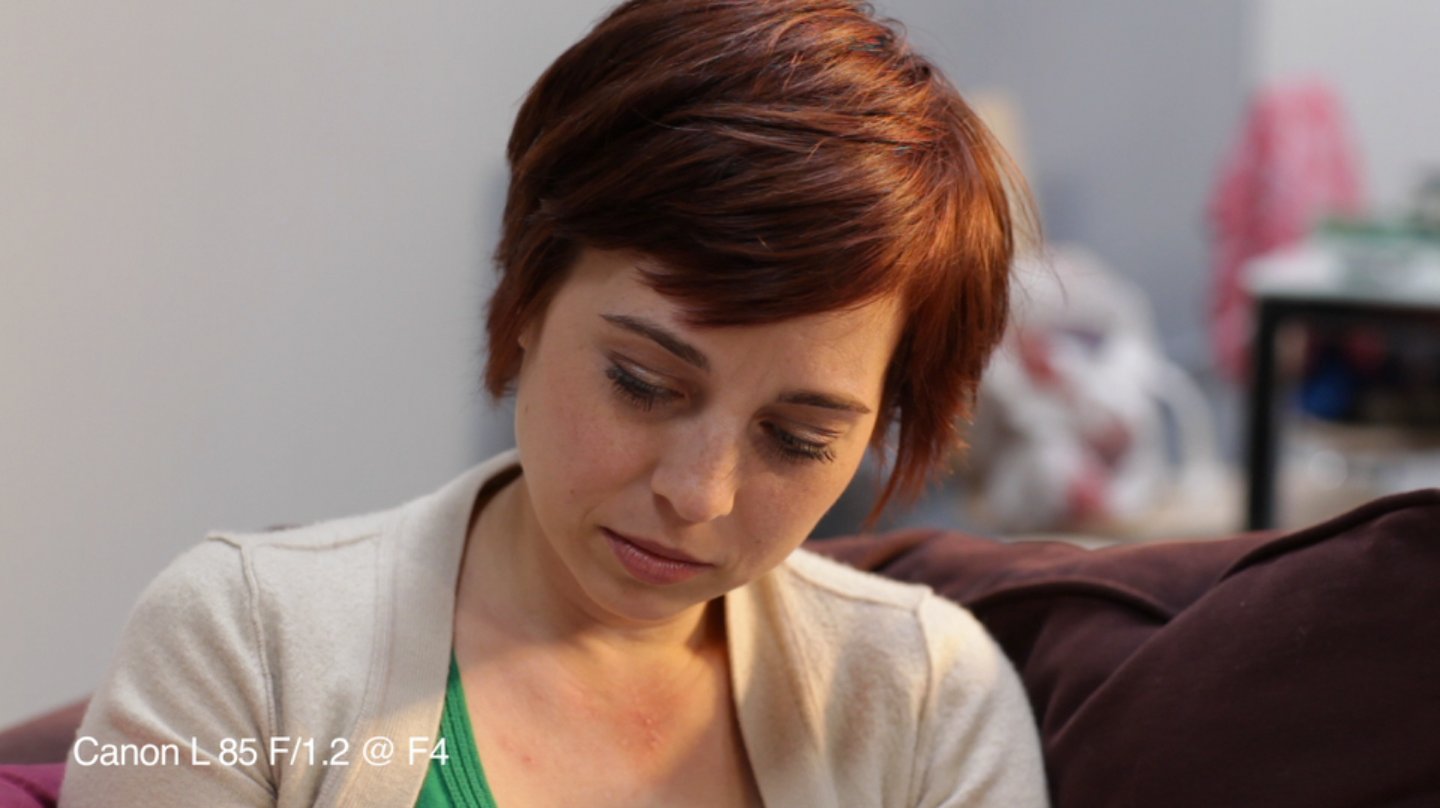
Micro Moire in her hair
Slightly softer image from the zoom

Leica
The Leica glass produced creamy-looking images with wonderful contrast and colors. Though the lenses were contrasty we found that they had a great fall-off and gradation between colors and luminance which held detail very well. Overall they were slightly warmer in color temperature and very prone to flaring.
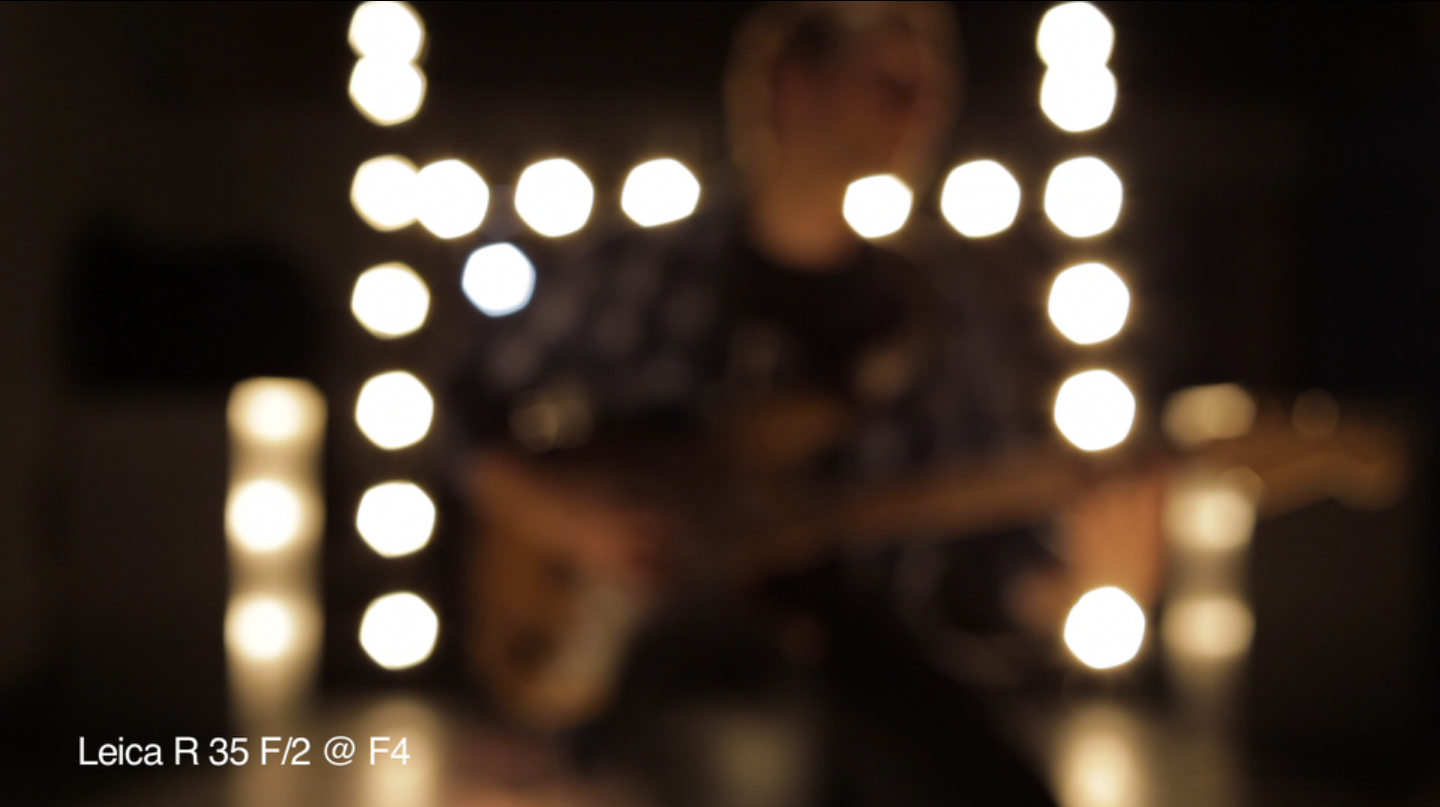
We did not use a Matte box for this test, which would have cut out a lot of the flaring. Also, out-of-focus highlights have more of an octagon shape due to the lenses having fewer iris blades.
Flaring Example
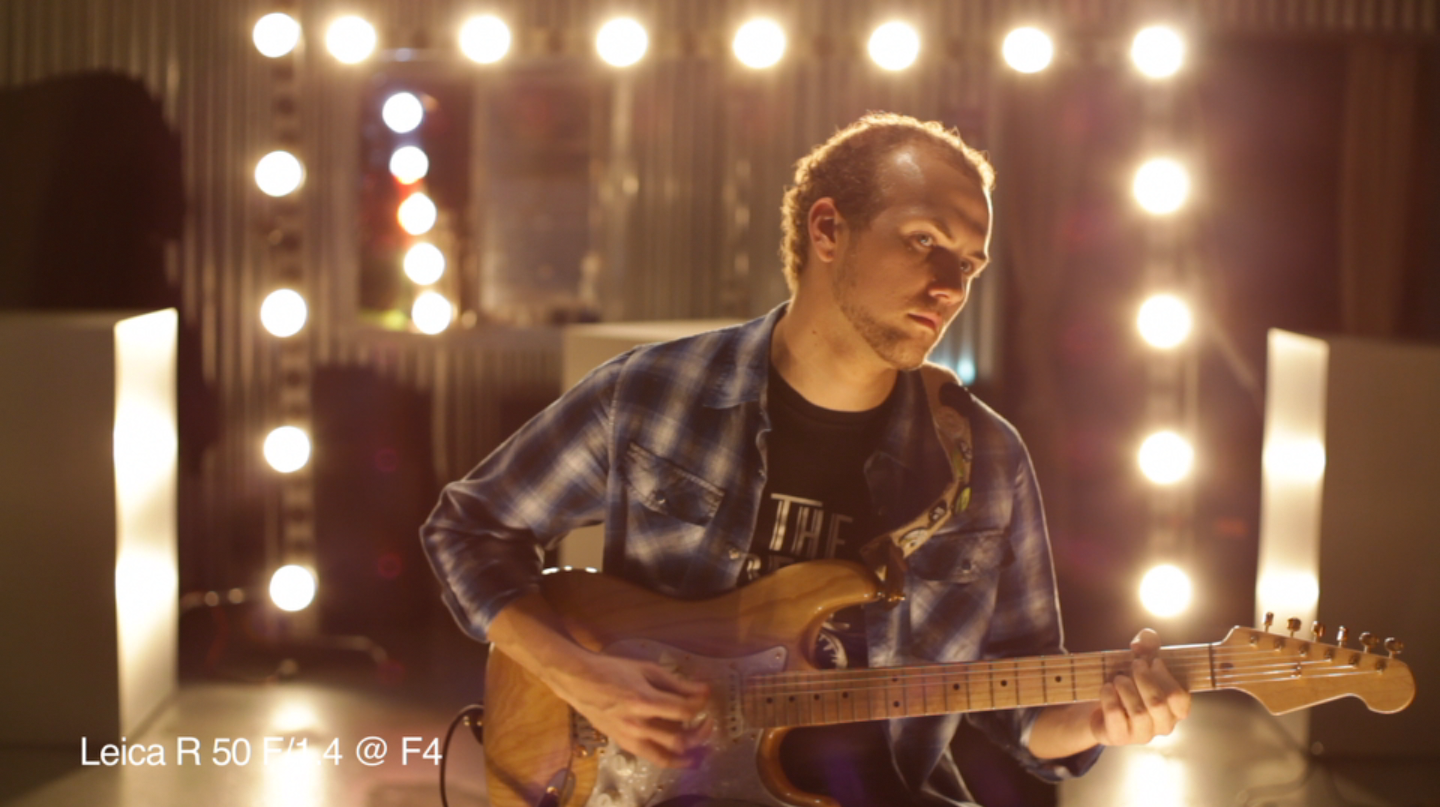
Octagon shaped highlights
Zeiss
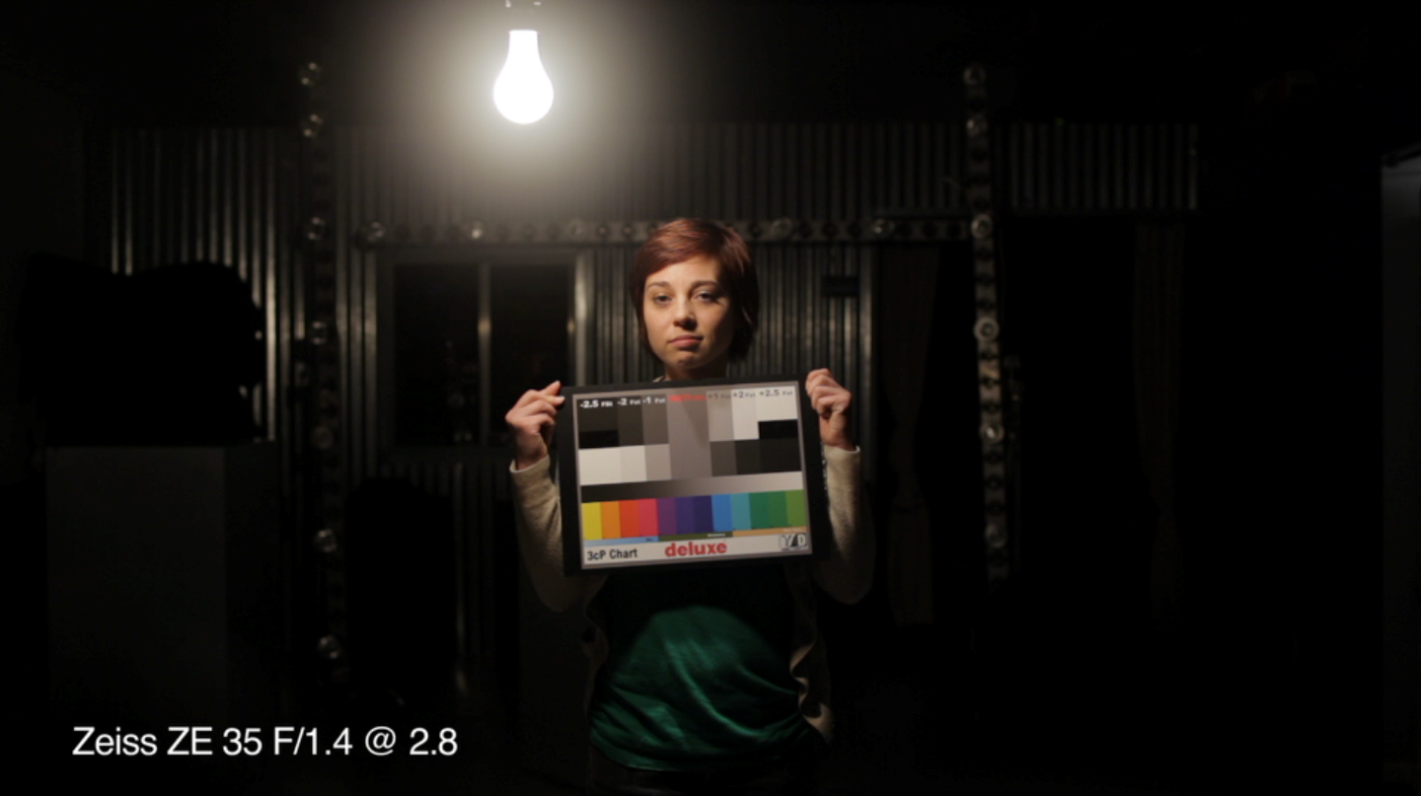
The Zeiss glass produced Sharp, snappy, and contrasty images. Slightly cooler in color temperature as well. The contrast was problematic with shots with strong highlights as it seemed to lose some detail in the highlights.
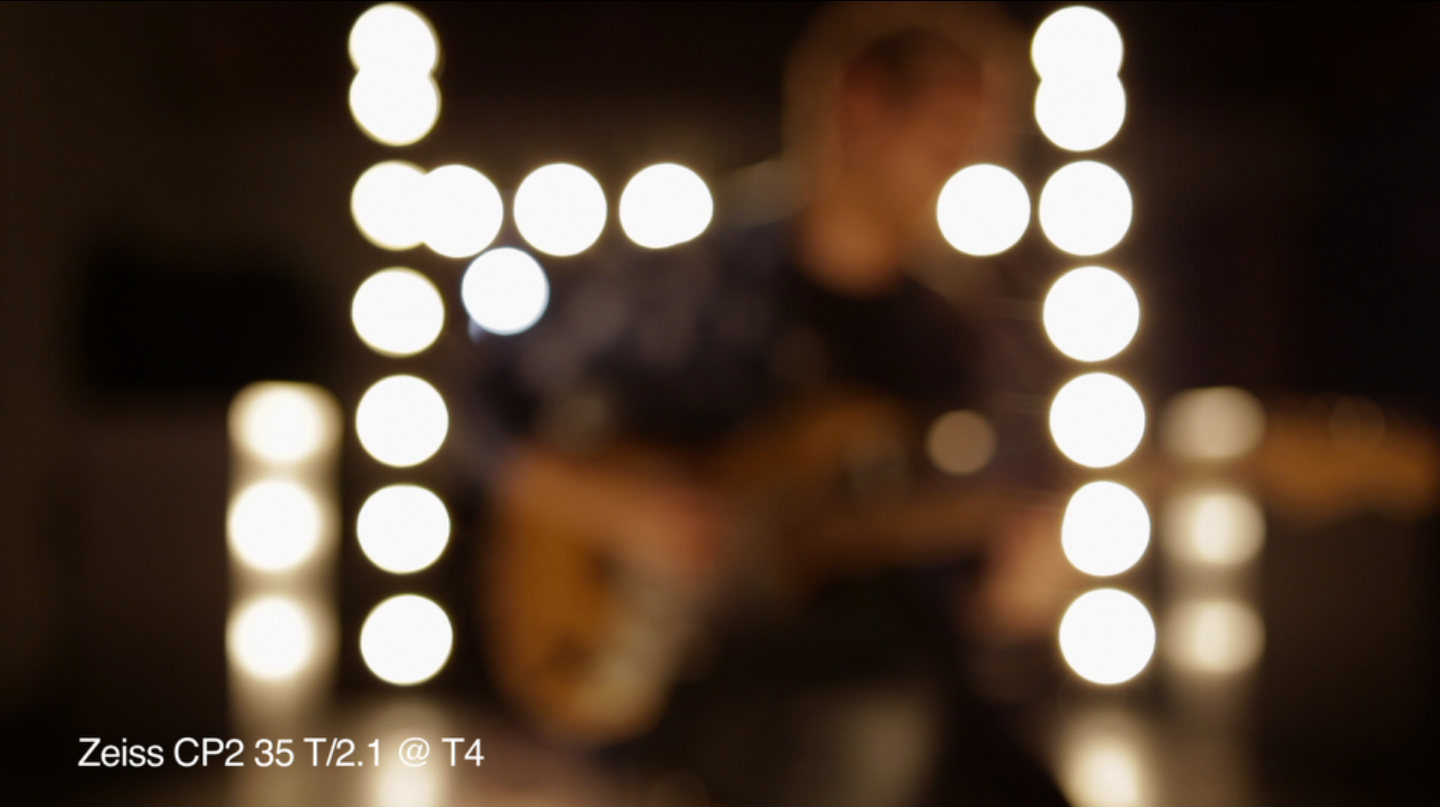
The ZE 35mm F/2 produced a strange halo blooming type flare which could be problematic depending on your shooting situation, personally, I liked the aesthetic. The CP2s were less prone to flaring due to their build and had very smooth out-of-focus highlights and bokeh.
Flaring of the Zeiss ZE 35mm F/2
Smooth out-of-focus hightlights on Zeiss CP2 35 T/2.1
Lenses are another tool at your disposal to shape your visual storytelling. These are a few of our findings and should provide a better understanding of their strengths and weaknesses. What are some of your experiences and preferences with lenses?
Schedule 1-on-1 Video Call with Shane Hurlbut, ASC
Looking for mentorship in the film industry? Schedule a 1-on-1 meeting with Shane Hurlbut, ASC today! This is where you can get expert advice from an industry professional on your career or a particular project.
About Filmmakers Academy Cinematographer Mentor Shane Hurlbut, ASC
Director of photography Shane Hurlbut, ASC works at the forefront of cinema. He’s a storyteller, innovator, and discerning collaborator, who brings more than three decades of experience to his art. He is a member of the American Society of Cinematographers, the International Cinematographers Guild/Local 600, and The Academy of Motion Picture Arts and Sciences.
Hurlbut frequently joins forces with great directors: McG’s Netflix Rim of the World and The Babysitter, plus Warner Bros. We Are Marshall and Terminator: Salvation; Scott Waugh’s Need for Speed and Act of Valor; and Gabriele Muccino’s There Is No Place Like Home and Fathers and Daughters. His additional film credits include Semi-Pro; The Greatest Game Ever Played; Into the Blue; Mr 3000; Drumline; 11:14, which earned Hurlbut a DVDX nomination; and The Skulls. Notably, his television credits include the first season of AMC’s Into the Badlands.




Shane,
Great test, I noticed that the use of the L series prime in the CU of the girl gave a little to much red “punch” in her hair, to where it was slightly distracting. However, I really enjoyed the Leica’s performance in that scene and how they took the edge off of her hair and allowed me to see the eyes easier. I also really enjoyed the ZE’s halo type effect in the guitar scene. The CP2’s really gave the scene with the rack focus of the guitarist a very strong “Hollywood” type feel, and the way it held the bokeh was so dead on, it also had a movement to it where it kind of brings you into the scene.
Thanks
-Don
I noticed that in the video when it comes to the zeiss ze 35mm it goes back and forth as to whether its the f2 or the f1.4. which one did you use? thank you so much for this video. amazing.
Great! Thank you very much!!
thanks! what kind of lens ring do you use?
Hi Shane, once again thank you and your team for another fantastic article/blog.
A quick question, I was just about to buy the ZEiss ZF 35mm, would you say that halo effect is something you think might change in relation to working with different cameras and sensors? Greatly appreciate your thoughts.
Thanks again and a very Merry Christmas
Lliam
Shane,
What type of lens gears do you have installed on your Canon L’s? Are they permanently installed?
Merry Christmas to everyone. Wish all the best to Shane and his family during this season and for 2012!
PS. I purchase a whole arsenal of Leica lenses due to Shane. Excellent Lenses!
Great information, thanks team! Question: I rarely see you shoot wide open, is this simply preference… or do you just see minimal opportunities to incorporate this look given the stories you are telling? When you do shoot wide open (f/1.4 in “last three minutes” janitor scene for example) the image is still so sharp… it seems my wide open stuff is very furry and fuzzy in the edges… is this mainly proper lighting that makes your stuff look so good and crisp, even wide open?
..very annoying..as I suspected/feared there is little to no difference..
..therefore..no magic bullet lens that will give a great imagery…
Clearly this test proves that it is what you put in front
of the lens and not the lens itself that is the key to great imagery.
Surprised canon 70-200 zoom was so soft..those seem to have much better
reputation than the results in that photo.
This blog has been very helpful, can’t wait to go through your past blogs. Look forward to the future blogs and vlogs.
Thanks for the test! All of the lenses had some interesting differences…
Shane-
Since the CP2’s are in T stops, wouldn’t it make sense that at T4, they would clip in the highlights and have a but more shadow detail than a still lens at F4? I think you can see there does seem to be a bit more shadow detail in the guitar scene side-by-side, at least to my eyes. Would love to know what you think, otherwise it’s a real bummer that those lenses are limiting dynamic range compared to their cheaper competitors…
Thanks,
Steve
Shane,
Any thoughts here? Looks like you responded to others, was hoping you could chime in on my question when you get a minute?
Thank you my friend,
Steve
Steve, what’s your question Steve?
Merry Christmas for you and your family Shane. Thanks for being a teacher and inspirator!
Hans
The Leica lenses do not exhibit any purple fringing!
Lots of little tidbits to be glened out of this posting. Flaring, softness, number of blades, age of glass, etc.. Nice to see that the price points for these types of lenes were in the same ballpark. No S4’s to muddy up that one..
thank you guys
craigc, you are so welcome and thank you for your support.
Hello Shane, you’ve made some changes to the lens for use with the follow focus?
Mirko, yes we had them Cine-moded at Duclos Lenses http://www.ducloslenses.com/Duclos_Lenses/cine-mod.html
Awesome post!
Just wanted to point out that in the first paragraph you mention being obsessed with the “subtitles” is key… I had to reread that a few times before I realized you meant subtleties.
Great post though! It’s nice to see exactly how the lenses perform.
O’Ryan, got it. Thank you so much for the help. Thank you for your support.
Hi Shane,
thanks for such great test.
I like Leica R the most from all the bunch of those lenses in the test,…
Reading about this awhile ago on your video tutorials, then so many conversations with friends, then convos with you and then again with more people that I’m helping with DSLR filmmaking, it’s good to see a definitive article like this.
I definitely dig the side by side image comparisons, which is now officially a go-to resource for lens references. Thank you and your team so much for this.
BTW, what gears are you using for your lenses? I’ve stuck w/ other types, but yours’ appear seamless in 360 degrees of the lens barrel.
Oh wait, I JUST read: they’re Duclos modded :)
Shane,
What a super post lots of good information here!
What I would like to see is a page for each setup where we could see the panels of each focal length like the ones you showed. Then have them stacked so we could look down a column and see how the range of one lens group faired against the other focal lengths in its own group.
Thank you,
Bill
Bill Hamell, I will see if Derek can make that happen for you. Thank you so much for your kind words. I will pass this on to our kick ass Intern team
Great work. Nice to have a side to side comparision. I like the Leica R set (i own one after reading this blog), it´s the more cinematic visual aproach, but lately i found that the cine lenses gives you that kind of feeling that the still lenses can´t reach, I´m specially glad with the Lomo lens in APS-C. Besides that, Leica R rocks in full frame.
Pardon my english.
Happy new year to Shane and all the staff
Thanks
Ignacio, thank you so much. I think the Intern team did a great job. I love the Leica’s as well, but if I am shooting I am flying Panavision Primo’s. Act of Valor was shot mostly on Panavision glass, which is Leica.
I would love to see the Primo and Primo anamorphic lenses added to the mix as well.
Thank you very much to you Shane and your team,
to take time to show us difference beetween this sensible 18 lens ! :D
Hi Shane,
Thanks for this test you guys, you did a wonderful job,
What I found interesting is that Canon L seemed to let in more light than the Zeiss ZE even at the same settings, Knowing Canon is faster, But love the hair color from Zeiss much better, I own mostly Zeiss glass, Have a few L I use from time to time, But the color from Zeiss is more pleasing to me.
Thanks again
Hey Shane, thanks for a great post on lenses…..as glass is everything(almost), I think.
What kind of picture profile do you use on the Leica’s when you shoot, say like on Act of Valor?
Do you use different picture profiles on different types of lenses?
Have you tested Minolta MC Rokkor or Pentax Super Takumar lenses?
I’ve seen some nice stuff from those lenses, but never seen you mention them.
They might not be as sharp as the Canon, Leica and Zeiss, but I don’t always find that sharpness is the key when I using HD video. I often like the softness, flare etc in the way lenses renders an image more than just this crazy sharpness race.
HD video is somethimes way to sharp in the first place in my opinion :-)
Anyway keep on rockin’ out those great, informing and inspiring post Shane!!
Jim
The blooming/halo flare from the 35mm Zeiss ZE was quite disturbing, though easily fixed with lenshood or mattebox. I didn’t see the same flaring in the 85mm Zeiss ZE. Very surprised to see the amount of breathing in the Zeiss CP.2 lens, same as the ZE, although it did have least amount of breathing it was considerble. Canon L’s were worst in that regard. Also very interesting to see the difference in the color reproduction of the lenses ranging form warm on the L glass, very warm on the Leicas and cool/very cool on the Zeiss…for some reason I like the cool and crisp look of the Zeiss glass but the huge amount of contast could be a problem if used with a very saturated contrasty picture profile. If you were filming with a log-profile it would help with details, I think.
would be very cool if you could post some high res stills also next time. As this would make video compression less of a factor, and the differences in the lenses could maybe be seen more clearly.
hey shane,
does your leica 80-200 f4 breath alot?
chia-yu chen, yes a fair bit
I just tested the 80-200 and its pretty much unusable when the subject is moving. The smallest focus pull feels like the lens is zoooming… Really odd..rack focus is impossible
Is this true to your 80-200?
Isn’t the CP.2s the same as the ZE/ZF beside the housing? I have read several places that this is the only thing that separates them. The picture coming from both looks pretty similar IMO.
Birk Kromann, yes that is correct, same glass just in a Cinema wrapper.
Can someone tell me where I can buy the focus gears used on the canon L lenses pictured above?… Thanks!
John Galeano, Duclos Lenses. Talk with Matt, he will hook you up.http://www.ducloslenses.com/pages/cine-mod (818) 773-0600
Really enjoy all the tests and info that you put up on your site – I’ve viewed many of the pieces many times…
Thanks!
Alan Austin. Thanks for the kind words and support.
Shane, Thanks for all your info and the generosity of your resources. It’s simply fantastic.
I just can’t get over the flare of the ZE 35mm F2. Especially when compared to the 85mm of the same series. I’m curious, do you know if the ZE 35mm F1.4 (or any of the other focal lengths in this series) exhibit a similar kind of haze flare?
Graham Willoughby, thank you so much for you kind words and support. The 35mm is the only one that we have found do that. It is very weird, I agree.
Really useful test, thanks Shane! I also like the ZE halo, but you could get the same effect with diffusion, no?
Does the cp2 focus closer than the ze? B/c it starts way more out of focus in the tests. I also though its bokeh was probably the nicest out of the bunch.
There’s definitely some weirdness in the model’s forehead (purple/green fringing, looks like?) in the canon shot in this image: https://www.filmmakersacademy.com/wp-content/uploads/2011/12/image7.png I’ve noticed some purple/green fringing in specular highlights with the canon 85 1.2 in the past, do you find the other lenses are much better with that, or was it a case of the model being in a slightly different position in each shot?
thanks again!
Josh
If you can only have one canon l lens, what should you recommend?
Fernando, 50mm
Thanks for the information.
Enjoyed the article.
Paschal Brooks
Lighting cameraman
Ireland
Paschal Brooks, you are very welcome and thank you for your support
Thanks for the post.
Which 50mm lens will you recommend between Leica, Zeis CP2 and Canon
Uzezi Warri, The Leica is a still lens so all the issues that come with this, de-clicking, gears put on them for focus, hard to mark lens, hard to see what stop you are on and what focal distance you are at, because it is set up of a still photographer to look down at it not an AC. The CP2’s and the Canon Cinema Primes are geared, markings on the side and set up for filmmaking. The Zeiss will be more contrasty and cold and the Canon will be creamier and colorful
Hi Shane,
what do you think about the Red Pro Primes? Are they soft or sharp? Warm or cold?
In my first long feature I used them and a Canon 30-300 zoom so I noticed a big difference. Do you think is it possible to match those primes and that zoom in color correction? Or we’ll always see the difference?
Thank you a lot.
Not a fan of the RED Pro Primes. Too sharp and they’re not very cinematic for my taste. I think it can be done to match them, but the optical quality of the Canon zoom is much greater from how it creates a 3 dimensional quality to a human face, that’s where you will see the biggest difference. If you have a good colorist, they can all be matched.
Thank you very much for the answer, Shane. Are you saying that the excessive sharpness is less cinematic? I shot on Red Epic and softened the Red Primes with a tobacco filter cause I love warmness and softness, but maybe a better choice should have been the Canon CN-E primes. Do you think the RPPs are similar to the Zeiss Compact Primes for sharpness and coldness?
Shane, thank you for your great test. I recently bought Zeiss ZE lens after seeing your test and then comparing side by side Zeiss ZF vs CP.2. Neither in my ZE set nor in the set of the ZF from rental house the lens had such a glare when pointed against the lamps as it shows on your test.
I had two definite conlusions – they seem actually THE SAME: ZE/ZF/CP2. If I wouldn’t record my voice what was put on the camera – I wouldn’t discern one from another in the frame on locked-off camrea in close nor far focus nor while changing the focus during the take. Only when closing down the apperture I could see the difference in the iris shape in bokeh (the number of blades difference). ZE/ZF seemed even a bit sharper than two sets of CP2 lens I used alongside in two different occasions. I’m curious why the ZE set in your test was having all the mist.
Cheers, M.
I am not sure. I am not a big fan of this glass. I feel it is too soft and contrasty and it lacks detail. The Leica rule for me.