Cinema Lens Series: Angenieux Optimo Primes
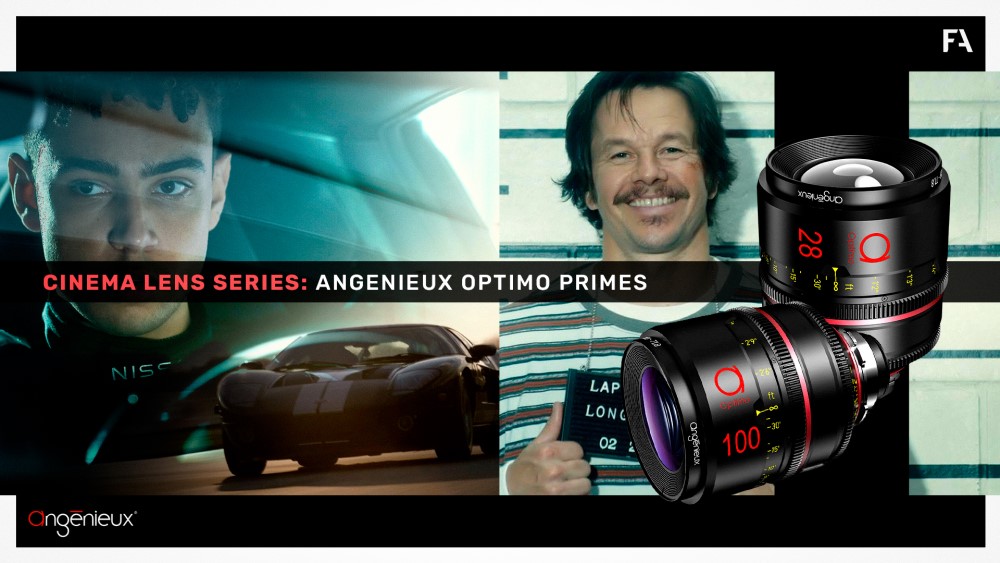
For decades, the name Angenieux was synonymous with one specific, undisputed title: the king of the cinema zoom. If a cinematographer wanted that legendary, warm, creamy aesthetic, they strapped a massive piece of Angenieux zoom glass to their camera and went to work. The industry accepted that reality. But what happens when the undisputed master of the zoom decides to invade the world of prime lenses? You get a massive, disruptive shift in modern optical engineering.
Enter the Angenieux Optimo Primes. This series completely shattered expectations by taking the highly coveted “Angenieux look”—the buttery focus falloff, dimensional separation, and incredibly rich skin tones—and packing it into a fast, lightweight prime housing.
Furthermore, the engineers in France built a highly customizable optical system. Featuring their groundbreaking Integrated Optical Palette (IOP) technology, the Optimo Primes allow cinematographers to physically swap internal glass elements, iris blades, and rear filters to craft entirely bespoke, signature looks directly inside the lens.
This is the Cinema Lens Series. While we typically use this space to highlight trusted vintage workhorses or standard industry staples, today we are dissecting a modern marvel that completely redefined a legendary manufacturer’s legacy. Let’s explore why the Angenieux Optimo Primes deserve a mandatory spot in your visual toolkit.
Angénieux Optimo Primes Gear List:
- Angenieux Optimo Prime 28mm T1.8 Lens (Feet)
- Angenieux Optimo Prime 50mm T1.8 Lens (Feet)
- Angenieux Optimo Prime 100mm T1.8 Lens (Feet)
What You Will Learn in This Article:
|
Other Cinema Lens Series Articles:
THE HISTORY OF ANGENIEUX OPTIMO PRIMES:
A CENTURY OF ZOOM DOMINANCE
To fully appreciate the Optimo Primes, we have to look at the massive shadow cast by the company that built them. Founded in 1935 by French engineer Pierre Angénieux, the brand quickly established itself as an absolute powerhouse in optical innovation. Angénieux revolutionized the industry by inventing the retrofocus lens design—which finally allowed wide-angle lenses to be mounted on single-lens reflex cameras without hitting the mirror—and he completely rewrote the playbook on mechanical zoom lenses.
For the better part of a century, Angenieux dominated the zoom market. Their Optimo zoom line became the gold standard on Hollywood sets, universally beloved for rendering a gorgeously smooth, romantic image that handled highlights beautifully and flattered skin tones like nothing else on the market.
SOLVING THE MATCH GAME
Because Angenieux was so fiercely dedicated to zooms, directors of photography who relied on the Optimo zooms had to look elsewhere when the lighting dropped or when they needed a lighter, faster prime lens for a Steadicam or gimbal build. They were forced to mix and match their Angenieux zooms with primes from manufacturers like Cooke or Zeiss. This resulted in hours in the coloring suite trying to perfectly match the distinct optical characteristics of two entirely different brands.
ENTERING THE PRIME ARENA
Angenieux finally answered the call in 2019. In a major partnership with Band Pro Film & Video and Jebsen CineCast, Angenieux announced their leap into the prime lens arena. The goal was twofold: to create a comprehensive, fast set of prime lenses that perfectly color-matched their legendary Optimo zooms, and to provide full-frame coverage for the rapidly evolving large-format digital cinema cameras (like the ARRI Alexa LF and Sony Venice).
THE INTEGRATED OPTICAL PALETTE
Recognizing that modern cinematographers were increasingly looking for ways to add character to clinical digital sensors, Angenieux introduced the Integrated Optical Palette (IOP). This allowed rental houses and cinematographers to physically unscrew the lens and swap out the internal elements. Want a softer, glowing vintage look? Swap in an uncoated internal element. Want a distinct, triangular bokeh? Drop in a different iris blade set.
A NEW MODERN STAPLE
Rolled out fully in the early 2020s, the Optimo Primes quickly transitioned from a highly anticipated announcement to a staple on premium sets. They achieved exactly what they set out to do. And that was providing the iconic, organic warmth of vintage French glass, paired with the cutting-edge, customizable mechanics demanded by modern full-frame filmmaking.
Angenieux Optimo Primes Lens Test
Does a $25,000 price tag guarantee optical perfection? Shane Hurlbut, ASC mounts the elite Angénieux Optimo Primes to the 8K sensor to see how this legacy glass holds up. In this excerpt from our Complete Lens Test Series, we examine the 28mm at T2.8 to reveal the true characteristics of the lens. Understanding how different glass reacts to light, focus, and skin tones is essential for every cinematographer building their visual style, whether you are prepping your first short film or a major feature.
GRAN TURISMO
|
When shooting Gran Turismo, Jacques Jouffret needed a lens capable of handling aggressive contrast. He also required a compact form factor for tight car interiors. Paired with the Sony Venice 2 Rialto system, the lightweight Angenieux Optimo Primes provided the perfect solution for his high-speed rigging needs.

Gran Turismo | Columbia Pictures
These lenses beautifully managed the harsh, specular sunlight glaring off the race tracks. Furthermore, they retained the organic, cinematic warmth necessary for the character-driven moments of the story. Jouffret leveraged their smooth focus falloff to isolate the driver’s intense expressions during chaotic races. Ultimately, the Optimo Primes prevented the razor-sharp digital sensor from feeling too clinical or sterile.
FATHER STU
|
As an early adopter of this new glass, Jouffret also relied on the Optimo Primes to shoot Father Stu. This biographical drama demanded a completely different visual approach than a high-octane racing film. The story is deeply intimate, requiring a highly textured and gentle visual palette to capture the emotional weight.

Father Stu | Columbia Pictures
By pairing the large-format Sony Venice sensor with the Angenieux Optimo Primes, Jouffret captured incredibly rich, natural skin tones. The lenses naturally provided a gentle roll-off in the highlights. Therefore, the practical lamps and daylight window sources felt soft and authentic rather than blown out. This specific choice perfectly demonstrates the incredible versatility of the Optimo Primes in modern filmmaking.
WATCH THE ULTIMATE 8K LENS TEST:
What separates a standard piece of glass from a truly cinematic lens?
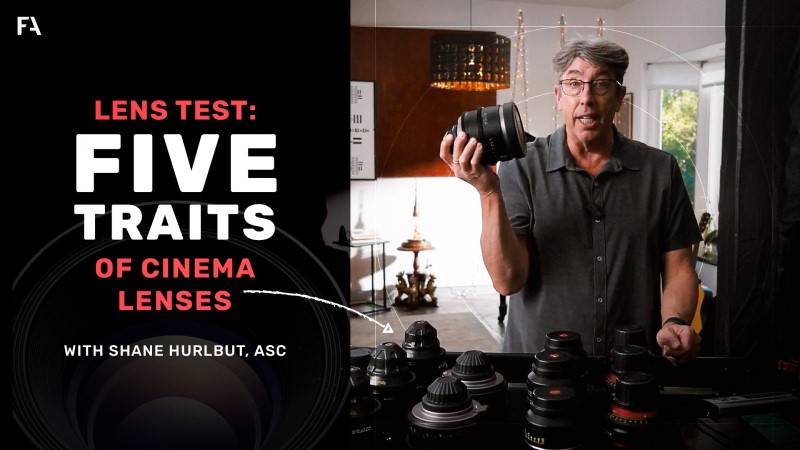
Join cinematographer Shane Hurlbut, ASC, for an exhaustive, six-part series (plus a comprehensive Cross Test) that completely demystifies cinematic optics. Shot on the Blackmagic URSA Cine Pro in stunning 8K, this series puts everything from affordable $2,500 primes to $25,000 elite glass to the ultimate test.
Whether you are a still photographer transitioning into motion or a seasoned DP looking to upgrade your kit, this series is essential in evaluating glass based on Five Critical Attributes.
What You Will Discover in This Lens Test:
|
THE BOTTOM LINE:
The Angenieux Optimo Primes represent a massive leap forward in optical engineering. For decades, cinematographers accepted the heavy compromise of mixing different prime lenses with their favorite zoom glass. Today, that compromise is entirely eliminated.
By distilling their legendary, warm aesthetic into a fast, lightweight housing, Angenieux gave filmmakers exactly what they demanded. Furthermore, they pushed the boundaries even further with the Integrated Optical Palette (IOP). This groundbreaking technology completely changes how we interact with our gear.
These lenses give you the ultimate power to customize your visual footprint. Instead of fighting a clinical digital sensor in the coloring suite, you can bake unique character directly into the glass on set. Whether you are shooting a chaotic action sequence or an intimate character drama, the Optimo Primes offer unparalleled control over your image.
As we continue to highlight essential gear in our Cinema Lens Series, the Optimo Primes stand out as a genuine milestone. They deliver the iconic, organic warmth of vintage French glass while fully embracing the highly technical future of large-format cinematography.
Angénieux Optimo Primes Gear List:
- Angenieux Optimo Prime 28mm T1.8 Lens (Feet)
- Angenieux Optimo Prime 50mm T1.8 Lens (Feet)
- Angenieux Optimo Prime 100mm T1.8 Lens (Feet)
JOIN FILMMAKERS ACADEMY AND SAVE $50!
Ready to take your filmmaking skills to the next level? Join the Filmmakers Academy community and gain access to exclusive content, expert mentorship, and a network of passionate filmmakers. Use code FABLOG50 to save $50 on your Annual membership!