Moonlight in cinema is a beautiful lie. We’ve all seen it: a lonely character bathed in a soft, blue-silver glow; lovers meeting under a luminous, romantic sky; a monster emerging from the stark, hard shadows of a full moon. These iconic images feel emotionally true, yet they bear little resemblance to the faint, often colorless light we experience in the real world. This is the magic of cinematic moonlight.
For cinematographers, mastering the art of moonlight is a fundamental skill. It requires a deep understanding of lighting theory, a command of specific on-set tools, and a clear artistic intention. How do you create a light that feels both natural and expressive? How have the techniques evolved from the days of film to the digital era?
This guide explores the complete world of cinematic moonlight. We’ll dive into the theory behind its signature look, break down classic and modern techniques for capturing it, and explore how its application changes across different genres.
What You Will Learn in This Article:
|
THE THEORY OF MOONLIGHT: WHY “BLUE”?
First, we must understand what we are trying to emulate. Real moonlight is simply reflected sunlight. Its visual characteristics are defined by its source and our perception.
| IT’S A SOFT SOURCE | Because the sun’s light travels millions of miles to the moon and back to Earth, it becomes a massive, distant, and therefore incredibly soft light source. |
| IT’S A LOW-LEVEL LIGHT | Real moonlight is extremely faint, often too dim for older film stocks or even some digital cameras to capture without significant noise. |
IT APPEARS COOL OR “BLUE”
This is the most important artistic interpretation. Due to a phenomenon called the Purkinje effect, in very low light, the human eye’s rod cells are more sensitive to blue and green wavelengths. This makes moonlit scenes appear cooler to our eyes.
Filmmakers have embraced and amplified this perception for over a century, establishing a strong cinematic convention: moonlight is blue or cyan. This color choice instantly signals “night” to the audience.
THE EFFECTS OF MOONLIGHT: CRAFTING MOOD AND SYMBOLISM:
A cinematographer uses moonlight to evoke a specific emotional response. Depending on its quality and intensity, it can symbolize a wide range of moods.
| ROMANCE AND MAGIC | Soft, ethereal moonlight often signifies love, magic, or a dreamlike state. Think of the iconic scenes in Moonstruck or the fairytale quality it can impart. |
| MYSTERY AND SUSPENSE | Cool, high-contrast moonlight is a staple of film noir and thrillers. It creates deep shadows where threats can hide and carves out a world of secrets. |
| HORROR AND DREAD | Hard, stark moonlight can feel menacing and unnatural. It’s used in monster movies to reveal a creature’s form or in psychological thrillers to create an atmosphere of dread. |
| SOLITUDE AND LONELINESS | A single figure bathed in a wide pool of lonely moonlight is a powerful visual metaphor for isolation and introspection. |
HOW TO CAPTURE MOONLIGHT:
Before the advent of sensitive digital cameras and versatile LEDs, creating believable moonlight was a major technical challenge that required a lot of light and clever techniques.
“DAY-FOR-NIGHT”
For decades, the most common method was “day-for-night.” This involved shooting exteriors during the day and manipulating the image to simulate night.
The process typically included:
The result often had tell-tale signs, like hard, sharp shadows from the sun (which a real moon wouldn’t create) and overly dark skies. While effective for its time, it was a clear visual compromise.
LARGE HMI LIGHTS
For “true” night shooting, cinematographers needed massive amounts of light to properly expose slow film stocks. The workhorse for this was the HMI (Hydrargyrum medium-arc iodide) lamp.

Large units like 12K or 18K HMIs were perfect for moonlight because they are daylight-balanced (around 5600K), which can be easily gelled with blues like CTB (Color Temperature Blue) to create the desired cool moonlight effect.
These powerful sources would often be placed high up on cranes or condors and punched through massive diffusion frames (like 12x12s or 20x20s) to create a large, soft, directional source.

MODERN TOOLS & DIGITAL TECHNIQUES:
The digital revolution completely changed the game for lighting moonlight. Two key advancements have given cinematographers more creative freedom and precision than ever before.
1. HIGH-ISO DIGITAL SENSORS
Modern cinema cameras are incredibly sensitive to light. A camera with a clean native ISO of 800, 1600, or even higher can “see” in the dark in ways that film never could. This means cinematographers no longer need the same massive light output. We can now work with much smaller sources, or even, in some cases, shape and augment actual moonlight for a hyper-realistic look.
2. VERSATILE LED LIGHTS
LED technology has been the other major breakthrough. Modern LED fixtures offer several key advantages over HMIs for creating moonlight.
| PRECISE COLOR CONTROL | Instead of applying gels, you can dial in the exact color temperature you want, from a cool 6500K to a warmer 4000K. You can also precisely add or subtract green/magenta to get a pure, clean moonlight color. |
| DIMMING WITHOUT COLOR SHIFT | LEDs can be dimmed down to 1% or lower without changing their color temperature, a major issue with older technologies. |
| LOWER POWER CONSUMPTION | LEDs are far more energy-efficient, allowing crews to use smaller generators or even run lights on batteries, increasing mobility and reducing costs. |
MOONLIGHT ACROSS GENRES
The quality of moonlight often changes depending on the story’s genre.
| ROMANCE | Moonlight is typically soft, flattering, and often backlit. A soft, cool backlight on an actor’s hair can create a magical “halo” effect. |
| HORROR | The light is often harder and more stylized. Top-down moonlight can create deep, shadowy eye sockets, while hard side light can create menacing, high-contrast looks. |
| ACTION/
THRILLER |
Moonlight is often used for visibility and tension. It’s typically a cool, high-contrast look that defines the space and allows the action to be seen clearly while maintaining a sense of danger. |
| PERIOD DRAMA | Moonlight in historical films often aims for a more painterly, naturalistic feel, emulating what moonlight might have looked like before the advent of widespread electrical light. |
MOONLIGHT AS ROMANCE AND MAGIC:
Theory and technique are essential, but the true power of cinematic moonlight is best understood by seeing it in action. Across every genre and era, filmmakers have used their interpretation of moonlight to create some of the most unforgettable moments in film history. Let’s explore some key examples that showcase its incredible versatility.
In its softest form, moonlight is the ultimate shorthand for romance, magic, and dreamlike fantasy. It creates a world apart from the harsh realities of daylight, a space where love and wonder can flourish.
IT HAPPENED ONE NIGHT
In this classic black-and-white romantic comedy, the moonlight isn’t blue, but its quality is everything. During the famous “walls of Jericho” scenes, director Frank Capra and cinematographer Joseph Walker use soft, diffused light to create a gentle, romantic glow in the motel rooms and outdoor settings.

It Happened One Night | Sony Pictures Entertainment
The moonlight feels gentle and forgiving, providing the perfect intimate atmosphere for the two leads (Clark Gable and Claudette Colbert) to slowly fall for each other.
MOONSTRUCK
The title says it all. Director Norman Jewison and DP David Watkin lean into the romantic ideal of moonlight, creating an almost operatic visual for Cher’s transformation. The iconic shot of her kicking a can down a Brooklyn street, bathed in the glow of an impossibly large and luminous full moon, isn’t about realism.
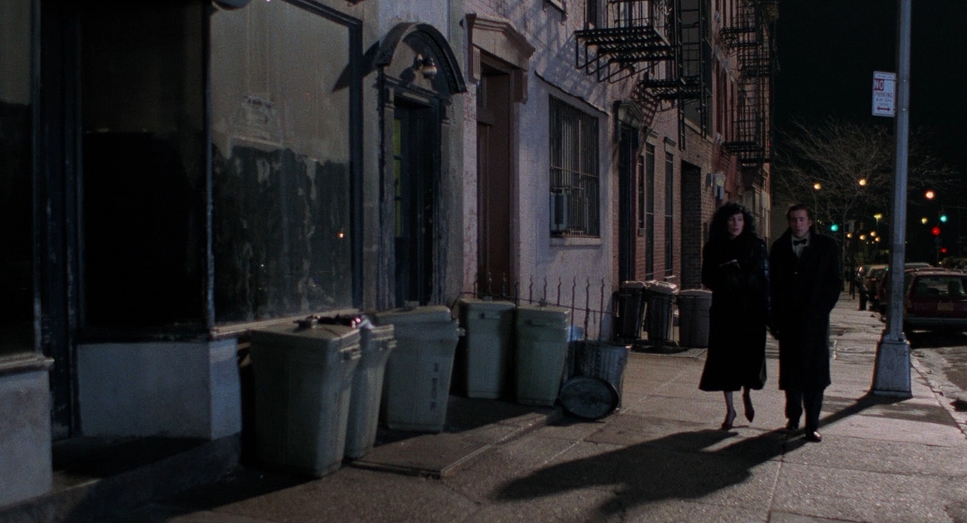
Moonstruck | MGM
It’s pure cinematic magic, a representation of her character being swept up in a powerful, unexpected passion that feels as grand and magical as the moon itself.
E.T. THE EXTRA-TERRESTRIAL
Steven Spielberg created one of cinema’s most enduring images by combining moonlight with a sense of wonder and liberation. The shot of Elliott and E.T. flying on a bicycle silhouetted against a massive, glowing full moon is pure visual poetry.

E.T. The Extra-Terrestrial | Universal Pictures
The moonlight here is a magical backdrop, a symbol of childhood imagination, freedom from earthly constraints, and the wondrous connection between a boy and his alien friend.
MOONLIGHT AS MYSTERY AND SUSPENSE:
In the world of film noir and thrillers, moonlight is rarely gentle. Instead, it becomes a tool for creating high-contrast, shadow-filled landscapes where mystery and danger can thrive.
OUT OF THE PAST
A quintessential film noir, cinematographer Nicholas Musuraca uses moonlight as a hard, sculpting source. The cool, silvery light cuts through the darkness, creating stark highlights on faces and deep, impenetrable shadows where secrets and threats can hide.

Out of the Past | Warner Bros.
Moonlight here is a source of tension, revealing just enough to make the audience lean in, while concealing the true dangers lurking in the dark.
THE NIGHT OF THE HUNTER
Director Charles Laughton and cinematographer Stanley Cortez pushed noir lighting into the realm of gothic horror. The famous sequence of the children escaping down the river perfectly exemplifies expressionistic moonlight.
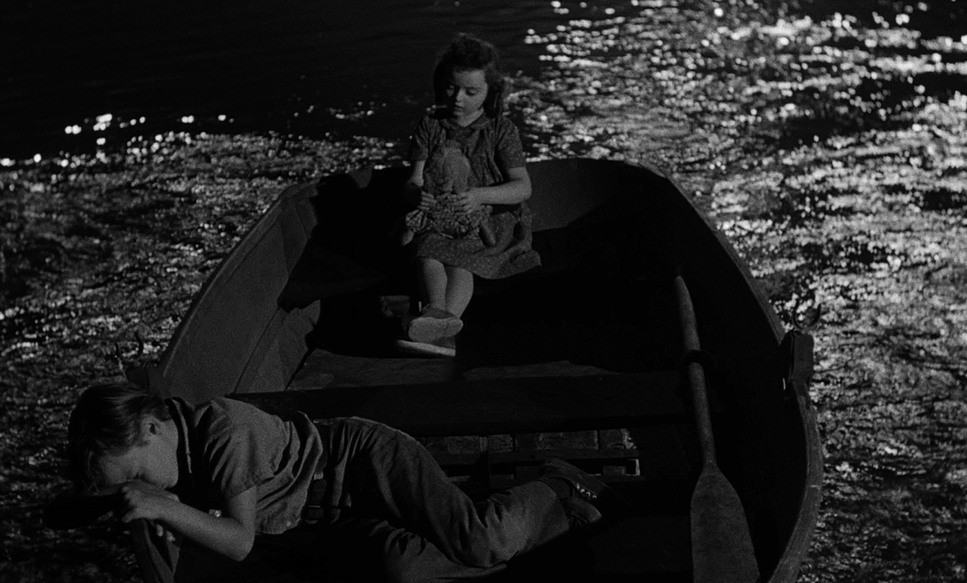
The Night of the Hunter | MGM Studios
The light is stark and menacing, creating terrifying silhouettes of the predatory preacher Harry Powell. It’s a heightened, almost mythic moonlight that transforms the natural world into a landscape of poetic dread.
ROAD TO PERDITION
In a stunning modern homage to classic noir, the late, great Conrad Hall, ASC, created an unforgettable moonlit shootout in the rain. The scene is almost entirely composed of silhouettes. The cool, ambient moonlight reflects off the wet street, providing just enough illumination to define the characters’ forms against the darkness.
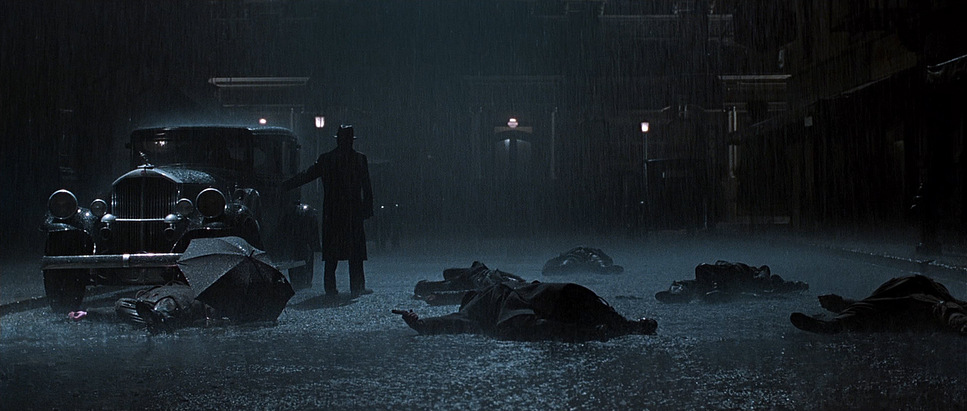
Road to Perdition | DreamWorks Pictures
The result is a violent, yet hauntingly beautiful and balletic sequence where moonlight is used to create a stark and tragic visual poetry.
MOONLIGHT AS HORROR AND MENACE:
When moonlight is used in horror, it often becomes a trigger for terror or the primary source that reveals the monster we fear.
CLASSIC UNIVERSAL MONSTER MOVIES
Films like Frankenstein (1931) and The Wolf Man (1941) established the visual language of Gothic horror. Moonlight was essential, often created with powerful arc lights on studio backlots. It would break through stylized clouds to illuminate a creepy castle or, most famously, trigger the horrifying transformation of man into beast.
Here, moonlight is a harbinger of the supernatural and a key light for terror.
 |
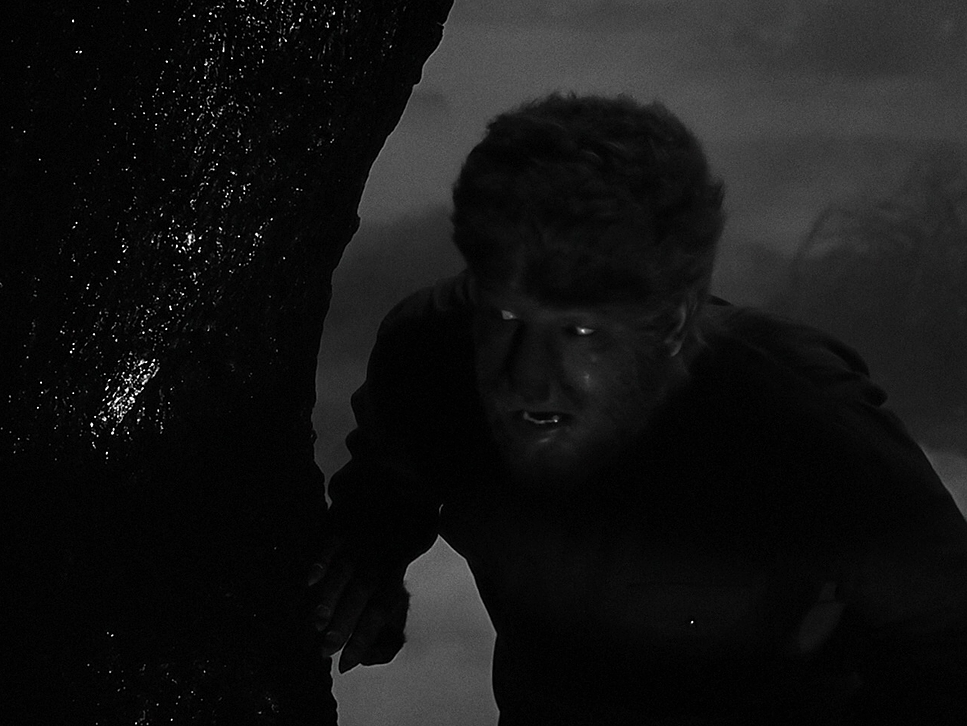 |
Frankenstein (L) The Wolf Man (R) | Universal Pictures
AN AMERICAN WEREWOLF IN LONDON
John Landis’s classic uses moonlight as the central, inescapable catalyst for horror. The protagonist’s painful, groundbreaking transformation scene is lit by a cool, blue moonlight filtering into a London flat. The light is both beautiful and cruel, a serene witness to a body-twisting nightmare, forever linking the full moon to a feeling of impending, inescapable doom.
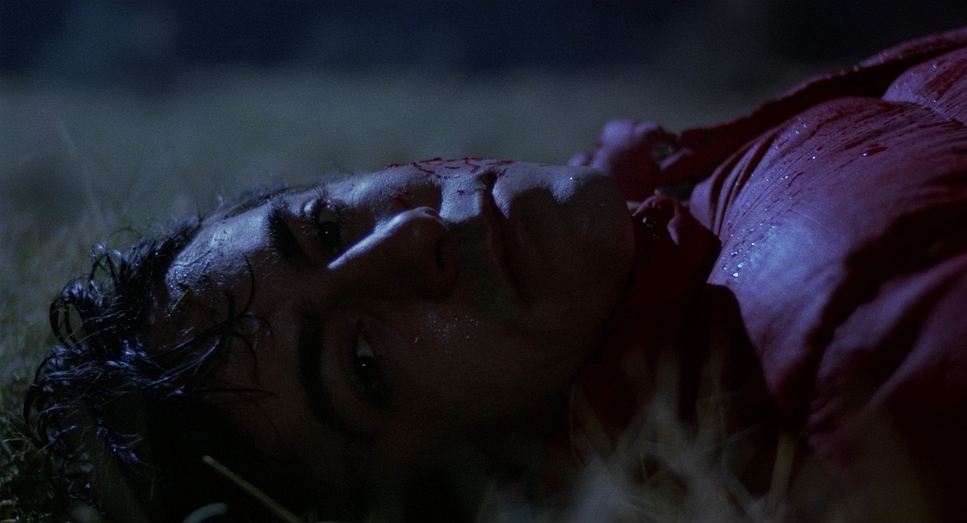
An American Werewolf in London | Universal Pictures
MOONLIGHT AS SOLITUDE AND TRANSFORMATION:
Beyond romance or horror, moonlight can be used to create moments of profound introspection, isolation, and personal transformation.
MOONLIGHT
Barry Jenkins’s Best Picture winner uses its title’s namesake for one of its most pivotal scenes. Cinematographer James Laxton created a beautiful, naturalistic moonlight for the beach sequence where a young Chiron learns to swim.

Moonlight | A24
The soft, gentle, cyan-toned light feels realistic and deeply intimate. It’s a color and quality of light that feels safe and vulnerable. Bathed in this glow, Chiron experiences a rare moment of trust, connection, and profound personal transformation, forever linking the moonlight to this formative experience.
THE REVENANT
Cinematographer Emmanuel Lubezki, ASC, AMC, famous for his use of natural light, captured the brutal beauty of the winter wilderness under moonlight. In the film’s night scenes, the vast, snow-covered landscapes are illuminated by a cold, silvery light (often augmented subtly by cinematic sources).

The Revenant | New Regency Productions
This moonlight is vast, indifferent, and isolating. It powerfully emphasizes Hugh Glass’s solitude and his desperate, primal struggle for survival against an immense and unforgiving natural world.
THE BOTTOM LINE:
The evolution from day-for-night and massive HMIs on film to sensitive digital sensors and precise LEDs has given filmmakers an incredible array of tools. We can now create any kind of moonlight imaginable, from the most subtle and naturalistic to the most stylized and dramatic.
However, the technology is only half the equation. The fundamental goal remains the same as it has for over a century: to use the cinematic language of light and shadow to serve the story. The next time you see a character bathed in that cool, silver glow, know that it is not an accident. It is a deliberate, artistic choice — a cinematographer painting the night with emotion and purpose.

JOIN FILMMAKERS ACADEMY AND SAVE $50!
Ready to take your filmmaking skills to the next level? Join the Filmmakers Academy community and gain access to exclusive content, expert mentorship, and a network of passionate filmmakers. Use code FABLOG50 to save $50 on your annual membership!
This video is proudly lit exclusively by Nanlux-Nanlite Lights and sponsored by B&H and Hollyland.