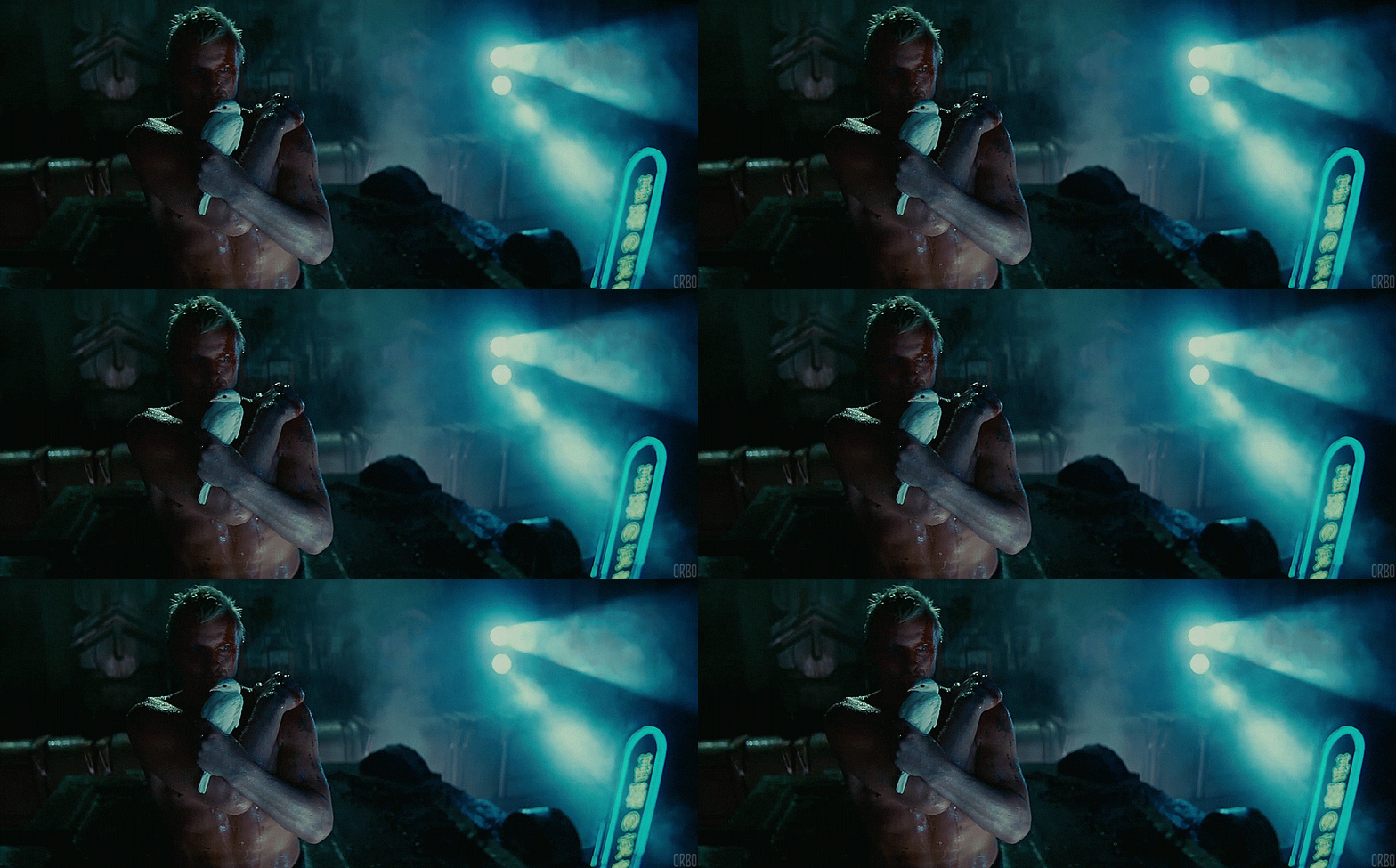
A Xenon light is a high-intensity discharge lamp that produces one of the most powerful and concentrated beams of light in cinematography. Originally developed by Richard Hart (often referred to as “Dick Hall”) for the iconic film Blade Runner, this fixture became a staple for creating atmospheric, moving light effects.
The Xenon bulb sits within a deep parabolic mirror reflector, allowing it to project a beam over incredibly long distances with minimal “spill.” Because of its unique optical properties, the Xenon light is widely considered the most realistic-looking simulation of natural sunlight available to filmmakers.
Optical Characteristics and Color
Xenon lights are natively daylight balanced at 5600K. This makes them perfect for augmenting natural light or creating high-contrast “shafts” of light in moody interiors. The fixture features a spot and flood function. Nevertheless, its beam behaves differently from a standard Fresnel.
When you spot the light in, it produces a beautiful, piercing circle of light. However, when you flood the light out, it often creates a “donut” shape pattern. This occurs because the globe sits directly in the center of the parabolic reflector. It creates a small dead zone in the middle of the beam at wider angles. Despite this, the hardness of the light is unparalleled. Thus, it produces razor-sharp shadows that other fixtures struggle to replicate.
Practical Applications and “The Blade Runner Look”
Cinematographer Jordan Cronenweth famously used Xenons on Blade Runner to create sweeping, searching beams of light that tracked through interior spaces. Today, gaffers use Xenons for several specific high-impact effects.
| Sun Shafts | Because the beam is so parallel (collimated), it can create a “god ray” effect through haze or smoke that looks exactly like a sunbeam. |
| Water Effects | Xenons are excellent for reflecting off moving water to create shimmering “caustics” on a ceiling or wall. |
| Hard Shadows | By bouncing a Xenon off a convex mirror, a DP can create incredibly hard, detailed shadows even in a large space. |
Technical Challenges: Heat and Noise
Operating a Xenon light requires significant technical expertise due to its extreme physical properties.
Noise Management
The lamp head contains a very noisy cooling fan. Because of this, you generally cannot use a Xenon for sound work if the fixture is near the camera or the actors. If the script requires a quiet scene, the lighting team must rig the Xenon far away or utilize long “header cables” to keep the noise off the microphones.
Heat and Tilting
Xenon globes emit intense heat. If you point a Xenon directly downward, the heat can cause the light to “dance” or flicker as the hot air rises past the arc. To solve this, professional crews often point the Xenon horizontally into a mirror and then tilt the mirror down to the subject.
Mirror Safety
You must exercise extreme caution when bouncing Xenons into mirrors. If the filmmaker “spots in” the light tightly, the concentrated heat will shatter or explode a standard glass mirror. Experienced gaffers always “flood out” the light before hitting a mirror or use specialized high-heat metallic reflectors to avoid equipment failure and safety hazards.