Finally, a Cloud-Based Production Tool Made for Filmmakers

I’ve been thinking a lot about something Shane says: “You have to protect the creative.” Now, he’s usually talking about lighting, blocking, and camera movement. But I think budgeting, expense tracking, and production actualization are part of that craft. These are areas where many filmmakers feel stuck, overwhelmed, or constantly chasing versions, approvals, and corrections.
Budgets can either protect the creative or strangle it. In my experience, when the numbers are a mess, everything else feels harder: conversations get tense, producers are distracted, and everyone’s just trying to stop the bleeding instead of making the day.
Enter Saturation.io: a cloud-based tool for collaborative budgeting, actualization (“what did we spend vs what we planned”), payments, and expense tracking.
This has been built from the ground up by working filmmakers, for filmmakers. It’s also built to handle teams that need to move fast. You can give department heads, producers, and directors access to the budget and expenses for real-time visibility, so they know what’s going on before it becomes an issue.
Here are some of our personal recommendations…
Start Early in Pre-Production:
One thing I’ve noticed is how much smoother things go when you start building the budget early. In our line producing series, we talk about breaking a script down and calling vendors right away for real quotes.
Nicole Hirsch Whitaker said she spent months in prep just doing research and talking to camera and lighting houses before her crew was even hired, which probably saved her a ton of stress later.
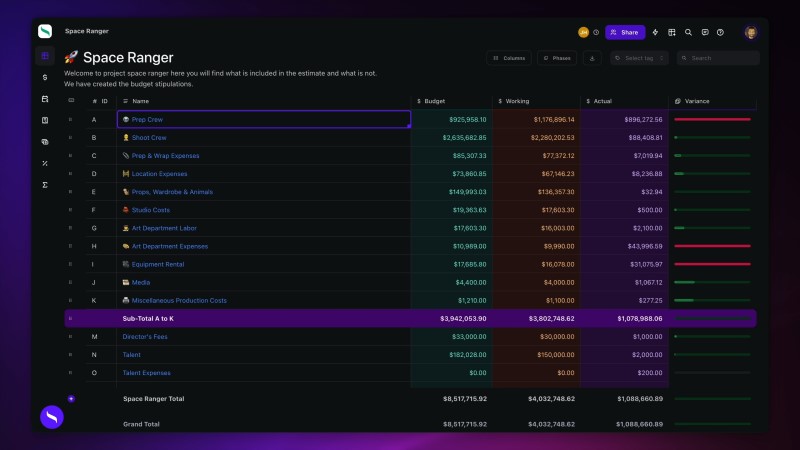
This is where Saturation.io fits in. Bring it in as soon as you start bidding on a job, location scouting, getting quotes, or pricing rentals. If this is all new to you, they have budget templates like AICP, Amazon, Feature Film, Netflix Productions, Music Videos, or tax credit programs. You can add rates for crew, equipment, and vendors right into your workspace as you collect them — day rates, rental packages, even currency-specific pricing — so you’re not retyping everything from scratch for the next project. You can also attach PDFs of quotes right to a contact, so when you need to update numbers or request a new bid, you have the history right there.
Build the budget as you collect info — not two weeks before production. It’s way harder to reverse-engineer a budget once you’re in the middle of a shoot. Shane talks all the time about strong prep being the thing that protects the creative, and this is part of that. Let Saturation live in your workflow from day one so you’re not just reacting to numbers, you’re steering them.
Define Roles Clearly
Inside Saturation, you can assign who “owns” which part of the budget — who enters expenses, who approves payments, who updates rates. That keeps everyone from stepping on each other’s toes. Without that clarity, you’ll end up with duplicate expenses or missed invoices, which is how budgets spiral out of control.
Use It as a Decision Filter
One of the better parts of Saturation is how fast you can see the impact of changes. Thinking about adding a second camera or a Steadicam day? Duplicate the budget, plug in the cost from your saved rate card, and see what happens. It might turn out you can afford it — or that you need to cut something else to make it work. Either way, you’re making choices with numbers, not gut feelings.
Educate the Whole Team
Don’t leave departments out. If cinematography, art, lighting, etc., all understand how budgets work (or see what costs certain gear or crew time), creativity becomes more grounded and resourceful. Because rates and contacts live in one place, it’s easy to give department heads visibility into what things actually cost. If Grip knows the real rental rates for specialty gear, they might choose a smarter substitution before asking for something that blows the budget.
Maintain Transparency, but Protect Vision
The nice thing about having a shared platform is that you can give people the right level of access. Producers and accountants might see everything; department heads might just see their lines and available spend. You can keep sensitive conversations private while still giving the team enough info to plan responsibly.
Reflect During Wrap / Post-Mortem
Shane has often emphasized learning from each project. After production (or even mid-shoot), run reports: what budgeted items went over, what savings were found, what estimates were wildly off. Once the project wraps, you can run reports in Saturation showing where you went over or under and compare those numbers to your original rate cards. This makes the next project’s prep way faster because you’re working from real, updated data instead of just guessing again. Shane’s big on learning from every job; this is an easy way to carry those lessons forward.
Real-World Scenarios: How Saturation Can Save the Day
Sometimes it’s easier to see the value of a tool in action. Or at least, in a hypothetical situation that feels uncomfortably familiar. Here’s how using Saturation.io could have helped.
The Equipment Overrun on a Remote Shoot
Imagine you’re shooting in a remote location. Rentals, transport, crew per diems, meals. Suddenly, you discover that shipping lighting gear up the mountain costs way more than anticipated.
If you used Saturation.io from the start, those costs would have been sitting in your budget already. Because you’d have added the transport rates from your grip truck vendor to your workspace rate card during prep. Your line producer could’ve tagged those costs to the right contacts and flagged the added expense for everyone to see.
Instead of scrambling on set, you could run a quick “what-if” version (called a Phase) of the budget: scale down the gear package, add a pre-rig day to spread out crew hours, or compare the cost of shooting closer to basecamp. The director would have clear numbers in minutes, not days, and could make a call before the first truck leaves the yard.
Mid-Production Change Demands:
Say the director calls for extra coverage, or the weather shuts you down for half a day. With Saturation, you can log that change order in real time, link it to the affected line items, and see the ripple effect on overtime and rentals right there, real time in the budget.
Because your crew and equipment rates were already stored in Saturation, you don’t have to ask production accounting to “run the numbers” from scratch. You just make a new phase of the budget (duplicate), adjust the quantity of hours/days, and see how far you can push before hitting the red.
Then, when you need to trim elsewhere to stay on target, you’ve got a live picture of which departments can actually afford to give something back. That kind of agility keeps morale up, because everyone knows the decisions are based on real data, not gut panic. It helps avoid the dreaded “we tried our best, but we overspent by 30%” moment at wrap.
To be clear: Saturation.io is strong, but no tool is perfect. Based on what Shane’s audience expects, here are some features to check, or what to watch out for:
Customizable Reporting & Exporting
Does it let you export in formats your finance team uses (e.g., PDF, XLS, CSV, or integration with accounting software)?
Yes! You can export custom PDFs, CSVs, import budgets from other software, invite members of your team for access, and Saturation even integrates with QuickBooks.
Offline / On-Location Modes
Sometimes connectivity sucks on location; is there a way to input expenses or approve offline and sync later?
Unfortunately, not yet. The benefit of being cloud-based is that, like QuickBooks Online, nothing will crash, and it’s not locked to 1 computer. Everything is always stored and safe, and accessible whenever you have an internet connection.
Cost of License/Subscription
Ensure the pricing makes sense for your production size. With an annual subscription, Saturation is a lot less expensive than other software licenses.
Security and Permissions Control
Who sees what? Who can edit vs who can view vs who can approve?
The great thing about Saturation is that you can invite others from your team, or department heads, and you can have limited access to specific areas of a budget. You can also invite a producer or accountant to manage project allocation.
Support/Training
Like any tool, you only get out what you put in. Tools with good onboarding, tutorials, or even in-team training will scale much better. Saturation is very intuitive. It feels like Google Sheets, Air Table, or Notion. But it’s designed with filmmakers in mind. They have a library of guided tutorials on their YouTube Channel.
The Bottom Line: It’s A Lot More Than Spreadsheets
Shane consistently pushes filmmakers to do more than just “get the shot.” He emphasizes vision, leadership, technical mastery, and clear communication. A tool like Saturation.io feeds into that ethos: it’s not flashy, but when used well, it enables freedom to make bold creative choices without being blindsided by unexpected costs, time overruns, or miscommunication.
If you’re a producer, director, or someone who wants to spend less time apologizing for missing numbers and more time getting your frames, lighting your scenes, working with your art & camera departments, this is the kind of system that helps you reclaim your creativity.
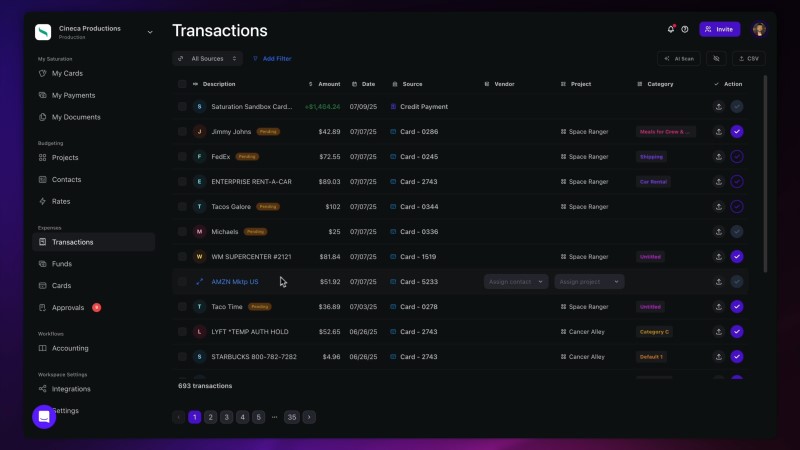
If you want to take things even further, Saturation also has Saturation Pay, which is included with an annual subscription to Saturation (for US-based, with no extra or hidden fees). This is where it gets really practical. You can issue digital or physical payment cards (P-Cards) to department heads, crew leads, or vendors (within seconds), and they can add them to Apple Pay to start using them right away. When a purchase is made, you can also scan receipts right then and there from the mobile app, categorize transactions, and watch them roll straight into the correct budget line. All in real time.
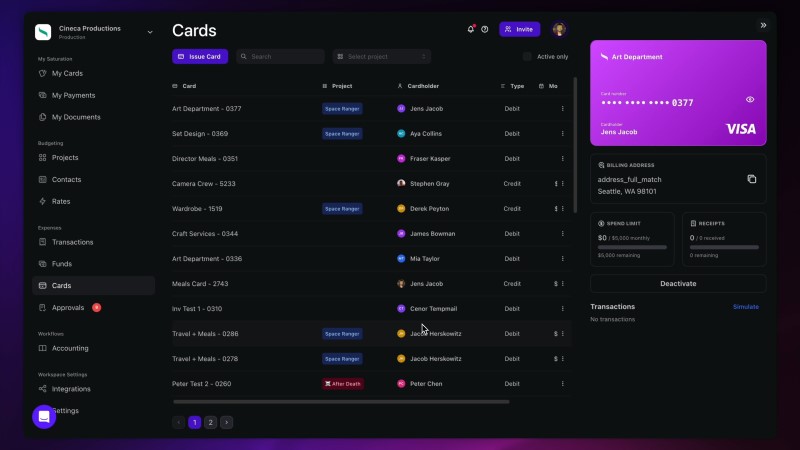
Need to pay a vendor? You can upload an invoice, send a payment with one click, and even set project-specific spending caps so no one goes over without approval. It basically turns your production bank account into a tool that’s as collaborative as the rest of your workflow. Meaning, you’ll always know where the money’s going while you still have time to course-correct (not after wrap).
Sign up for a Saturation Account!
JENS JACOB, PGA

Jens Jacob, PGA, is a seasoned film producer, founder of Sypher Films/Sypher Studios, and creator of Saturation.io, a platform innovating how productions manage budgets, payments, and financial workflows. He’s produced a diverse slate of films and videos, from music videos and branded content to documentaries and theatricals. His notable works include The Heart of Man, After Death, Please Don’t Feed the Children. Beyond producing, Jens combines creative vision with business acumen: leading teams, securing financing, navigating distribution deals, and developing original content for both features and series (Spreaker Article, IMDPro Profile, Wrapbook Interview, Voyage LA Interview).