Bleached & Unbleached Muslin
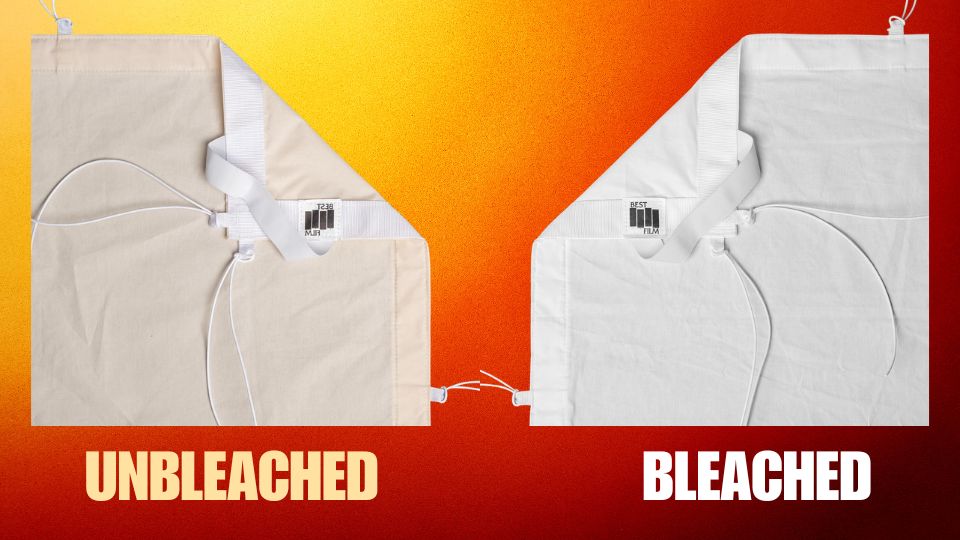
Muslin is a heavy-duty, versatile cotton fabric that has served as a staple in the motion picture industry since the silent film era. In professional cinematography, grips and gaffers use muslin primarily as a high-quality “bounce” surface or as a heavy diffusion material. Unlike synthetic materials, muslin offers a uniquely organic texture. It creates a soft, wrap-around light that filmmakers often prefer for skin tones and naturalistic environments. Depending on the visual goals of the project, a cinematographer will choose between two primary versions: bleached and unbleached.
Bleached Muslin: The Clean Source
Bleached muslin is white and provides a neutral, soft reflection. When you bounce a light source into a large frame of bleached muslin, the material scatters the rays evenly. This creates a massive, gentle key light that mimics the quality of north-facing window light.
Because it is a pure white fabric, it does not significantly alter the color temperature of the light source. However, it is slightly less reflective than “Ultra Bounce” or other synthetic materials. This “low-gain” quality is actually an advantage; it ensures that the light feels matte and natural rather than “specular” or shiny.
Unbleached Muslin: The Warm Alternative
Unbleached muslin (often called “natural muslin”) retains the raw, beige color of the cotton fibers. Consequently, this material acts as a warm bounce source. When light strikes unbleached muslin, the reflected light shifts approximately 500 degrees Kelvin warmer.
Cinematographers frequently use unbleached muslin to simulate the warm glow of firelight, sunset, or vintage interiors. It provides a “creamy” texture to the light that feels “aged” and cinematic. Additionally, because the fabric is thick, it can handle high-intensity lights without becoming a fire hazard, provided the crew maintains a safe distance.
Bounce vs. Diffusion
While most crews use muslin to bounce light, you can also “push” light through it. Using muslin as a diffusion material creates an extremely soft source. However, because the fabric is so dense, it causes a significant stop loss. You will need a powerful light fixture—such as an HMI or a high-wattage LED—to get enough exposure through the cloth. When light passes through the weave of the fabric, it loses all directionality, resulting in a wrap-around light that is perfect for close-up portraiture.
Best Practices and Maintenance
Muslin is an organic material, which means it requires careful handling on set.
| Keep it Clean | Muslin gets dirty very quickly. Once it collects dust or mud, it turns brown and loses its color accuracy. Always use “clean hands” and avoid letting the fabric touch the ground. |
| Color Shifts | As muslin ages, it naturally yellows. While this might be desirable for unbleached muslin, it can ruin the neutral look of bleached muslin. |
| Wrinkles | Large wrinkles in the fabric can create “hot spots” or uneven light patterns. Use a steamer or stretch the fabric tightly over a frame to ensure a flat, even surface. |
