There is a massive trap in modern cinematography: the obsession with developing a “signature style.” Emerging DPs often spend so much energy trying to force a specific, recognizable aesthetic onto every project—or immediately building a camera and lens package the second they get hired—that they completely miss the actual story on the page.
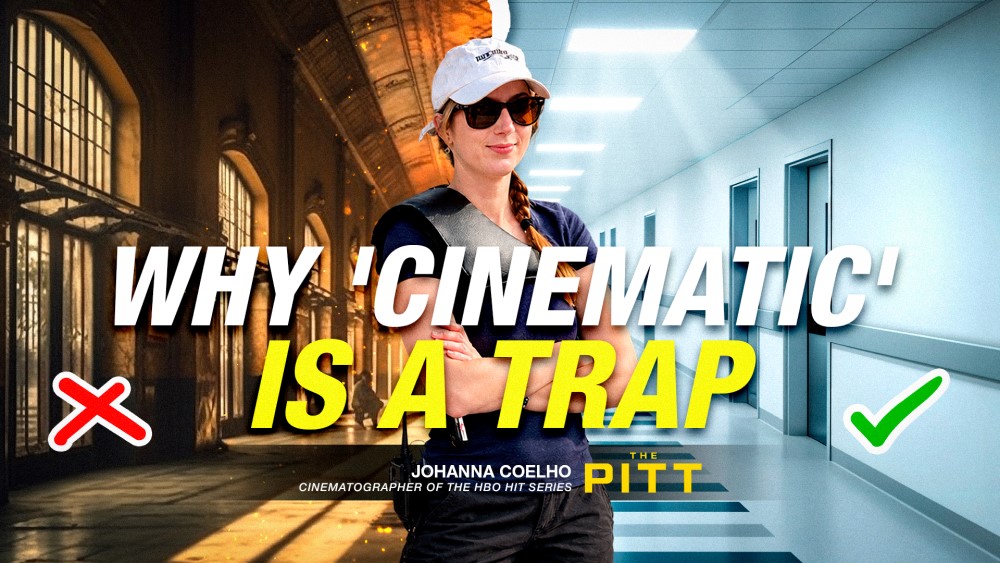
Cinematographer Johanna Coelho (The Pitt) operates from the exact opposite philosophy. Rather than forcing a rigid visual stamp onto a script, she approaches every project as a “visual psychologist.”
In a recent conversation, Coelho broke down how she found her voice as a department leader, why the camera package should always be the very last decision you make in prep, and how she mastered the art of lighting white walls to craft the visceral, documentary world of the hit medical drama The Pitt.
The Turning Point: Trusting Your Eye and Leading the Set
Early in her career, Coelho hit a wall that every cinematographer eventually faces. You can know the technical mechanics of exposure and framing inside and out, but if you cannot articulate why a shot needs to feel a certain way, you are just executing someone else’s checklist.
“I had a turning point… I was like, okay, if I’m going to do this, I need to be able to communicate my ideas and really show how I think the story should be told. Either I can do it, or I can’t.” — Johanna Coelho
Cinematography is a collaboration, but it requires active leadership. Coelho realized her primary job was to visually transmit emotion, which meant stepping up, trusting her instincts, and clearly communicating to the director why a camera needed to be in a specific spot or why a room needed to be lit a certain way. Once she stopped second-guessing her eye and embraced that leadership role, the entire craft became more natural.
Drop the “Signature Style”
While many cinematographers chase a trademark look, Coelho actively avoids having one. Because every script has a completely different emotional pulse, locking yourself into one aesthetic only limits your storytelling.
Whether a project calls for the hyper-symmetrical, locked-off framing of a Wes Anderson film or a relentless, handheld documentary approach, a DP must remain adaptable. Coelho compares stylistic choices to crossing the 180-degree line: it is completely fine to break the rules, provided you are making that choice with total awareness of the psychological effect it will have on the audience.
Don’t make a visual decision because it is the only trick you know. Make it because you understand every possibility on the table and chose the exact right one for the story.

Photo courtesy of Johanna Coelho
The “Visual Psychologist” Prep Workflow
When Coelho receives a script, she refuses to talk about gear. Instead, she follows a strict, character-first hierarchy in pre-production:
1. Analyze the Psychology
Before forming a single concrete visual idea, Coelho sits down with the director to dissect the characters. Why are they behaving this way? What are their hidden intentions? How does the director want the audience to perceive them? Until she understands the psychological engine of the people in the room, she cannot design the space around them.
2. Build a Unified Lookbook
Once the emotional foundation is set, Coelho moves into visual references. Using ShotDeck, she searches specific emotional and atmospheric keywords to build a cohesive lookbook. The goal here is not to pull random frames that simply look cool. Every single image on the board must transmit the exact same tone. When a director or showrunner looks at the board, the entire visual world of the show should click instantly.
3. Lock Movement Before Gear
Only after the tone is locked does Coelho begin mapping out framing, composition, and how the camera’s movement will connect the audience to the characters.
4. Choose the Tools Last
While many DPs start prep by building their dream equipment list, Coelho saves the technical package for the very end. Once you know the psychology, the tone, and the movement, the story will tell you what camera body and lenses it actually needs.
Reinventing the Medical Drama on The Pitt
When Coelho was brought on to shoot The Pitt—which follows the brutal, high-stakes reality of a Pittsburgh emergency room at Allegheny General Hospital across a single shift—executive producer John Wells started their first meeting with a clear mandate. He played several scenes from traditional television medical dramas and said: “This is exactly what we don’t want.”
To keep her eye completely fresh and uncorrupted by genre tropes, Coelho deliberately avoided watching other medical shows during prep. Instead, the team anchored the visual language of the show in raw, uncomfortable reality.
Lighting White Walls on a 360-Degree Set
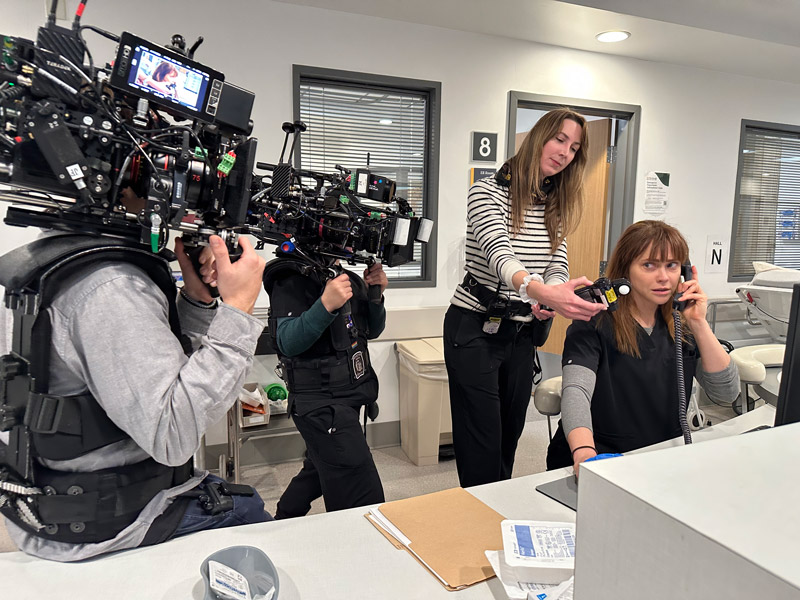
From the very beginning, the mandate for The Pitt was a 100% handheld, documentary-style camera operating inside a massive 360-degree set with bright white walls.
For most cinematographers, the words “full handheld” and “bright white walls” are terrifying. There is nowhere to hide stands, and there is no dark, moody shadow contrast to lean on. Instead of fighting the environment, Coelho leaned directly into it. By treating the 360-degree white walls as a massive, continuous natural bounce, she gained the flexibility to let the handheld camera roam freely without constantly relighting for every tiny angle adjustment.
Making the Lighting “Aggressive”
To find the emotional truth of the lighting, Coelho drew from a personal experience right before production began. While walking from a hospital waiting room into the ER for a minor surgery, she was struck by how jarring the transition felt. Combined with a production scout at St. Joseph Hospital in Burbank, that memory became the visual anchor for the show.
Real hospitals are not lit to be flattering; they are lit for utility. The overhead lighting bouncing off sterile white walls feels aggressive, blinding, and deeply uncomfortable. Coelho designed the lighting of The Pitt to replicate that exact sensation—stripping away the cinematic safety net so the characters, and the audience, feel completely exposed.
Because the entire season unfolds over the course of a single day, there isn’t time for heavy exposition. The psychological weight of the healthcare system—and the personal histories of the doctors and nurses—has to be revealed in fleeting glances, exhausted posture, and frantic walk-and-talks down those harsh white corridors. By prioritizing character psychology over pretty pictures, Coelho built a visual world where every single frame feels earned.
JOIN FILMMAKERS ACADEMY AND SAVE $50!
Ready to take your filmmaking skills to the next level? Join the Filmmakers Academy community and gain access to exclusive content, expert mentorship, and a network of passionate filmmakers. Use code FABLOG50 to save $50 on your Annual membership!